Indirizzo
304 Nord Cardinale
St. Dorchester Center, MA 02124
Orario di lavoro
Da lunedì a venerdì: dalle 7.00 alle 19.00
Fine settimana: 10.00 - 17.00
Indirizzo
304 Nord Cardinale
St. Dorchester Center, MA 02124
Orario di lavoro
Da lunedì a venerdì: dalle 7.00 alle 19.00
Fine settimana: 10.00 - 17.00
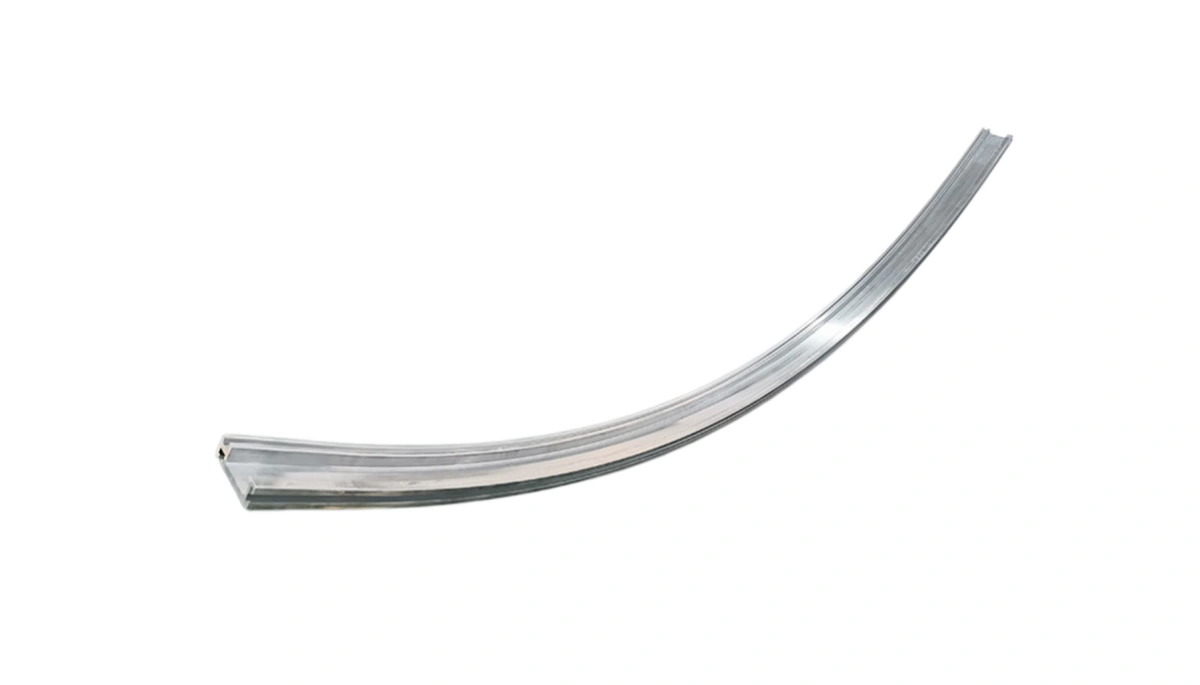
In the modern manufacturing landscape, the demand for lightweight, high-strength structural components has skyrocketed. From the aerodynamic curves of high-speed trains and aerospace frames to the sleek architectural facades of skyscrapers, aluminum profile stretch bending has become an indispensable technology.
Unlike traditional press bending, aluminum profile stretch bending involves applying a precise tensile force to an aluminum extrusion while simultaneously wrapping it around a die. This dual-action process minimizes structural defects, reduces wrinkling, and allows for complex curvatures that other methods cannot achieve. However, achieving high precision requires a mastery of three critical pillars: Tension Control, Temperature Regulation, and Springback Compensation.
This guide provides an in-depth analysis of the technical parameters and advanced strategies required to optimize the aluminum profile stretch bending process for high-performance applications.
Tension is the heart of the aluminum profile stretch bending process. Its primary role is to ensure that the material transitions from its elastic state into a controlled plastic state, allowing it to take the shape of the mold without structural failure.
Before the actual bending begins, a pre-tensioning force is applied. This stage is crucial for “setting” the profile and ensuring it is perfectly aligned with the die surface.
During the bending phase, the material undergoes the most significant deformation. The “stretch ratio” determines the final integrity of the profile.
Once the profile has reached its target curvature, a final “supplementary pull” or post-tension is applied.
Technical Pro-Tip: Modern CNC stretch bending machines utilize servo-controlled hydraulic systems to allow for multi-stage loading, ensuring that the tension profile matches the specific geometry of the part.
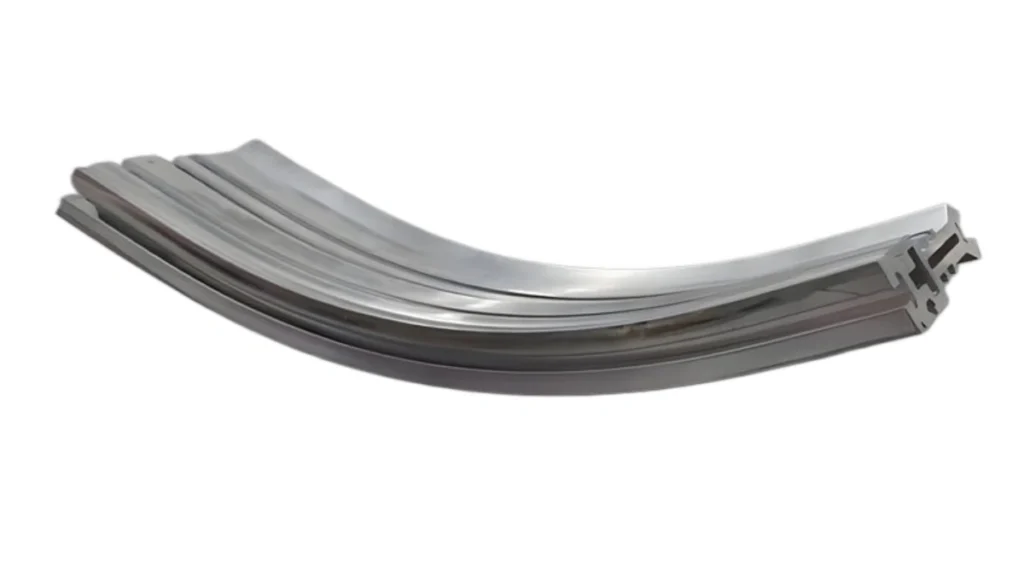
Aluminum alloys behave differently depending on their thermal state. Selecting between cold and hot aluminum profile stretch bending is a strategic decision based on the alloy’s temper and the complexity of the desired curve.
| Tipo di piegatura | Temperature Range | Ideal Materials | Advantages & Considerations |
| Cold Stretch Bending | Ambient (15–25°C) | 6063-T5, 6061-T4, 1xxx/3xxx series | Pros: Superior surface finish, no oxidation. Cons: Requires higher tension, high springback risk. |
| Warm/Hot Stretch Bending | 150–300°C | 7xxx series (7075), Aluminum-Lithium alloys | Pros: Reduces forming force by >30%, enables tight radii. Cons: Potential for surface scaling, requires post-process cooling. |
When performing hot aluminum profile stretch bending, temperature uniformity is paramount. Localized “hot spots” can lead to grain growth, which weakens the mechanical properties of the final part.
Springback (elastic recovery) is the single greatest challenge in aluminum profile stretch bending. Because aluminum has a relatively low Modulus of Elasticity (approx. 70 GPa, compared to 210 GPa for steel), it “remembers” its original shape more stubbornly than other metals.
For high-strength alloys like 6061-T6, a typical springback angle ranges from 5° to 8°. Hollow extrusions with thin walls are particularly susceptible due to their lower moment of inertia.
This is the most common manual adjustment. The profile is bent to an angle sharper than the final target.
In the era of Industry 4.0, “trial and error” is being replaced by Computer-Aided Engineering (CAE).
By holding the profile under tension at the end of the stroke, you allow for stress relaxation.
Based on empirical industrial data, the factors affecting springback are ranked as follows:
The takeaway for engineers: If your part is out of tolerance, adjust your total stretch percentage before changing your pre-tension settings.
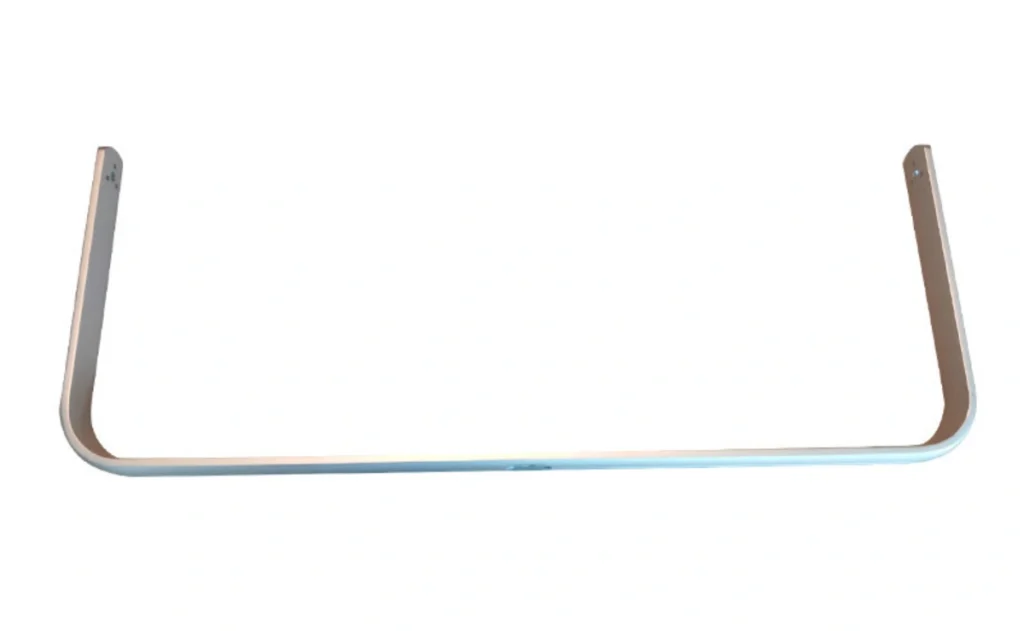
Beyond tension and temperature, secondary parameters play a vital role in the quality of aluminum profile stretch bending.
Friction between the profile and the die can cause surface scratching and uneven stretching.
The radius of the die entry and exit points must be carefully calculated.
Not all aluminum is created equal. The success of a stretch bending project often depends on the initial temper of the extrusion.
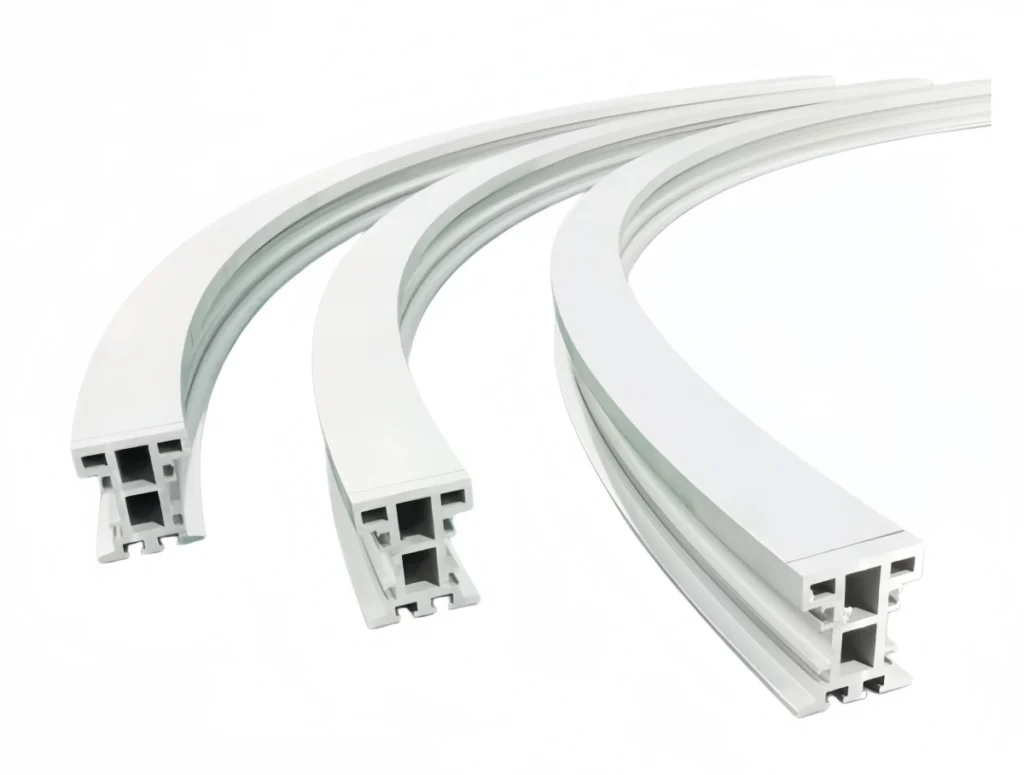
Even with the best parameters, issues can arise. Here is a quick reference for quality control:
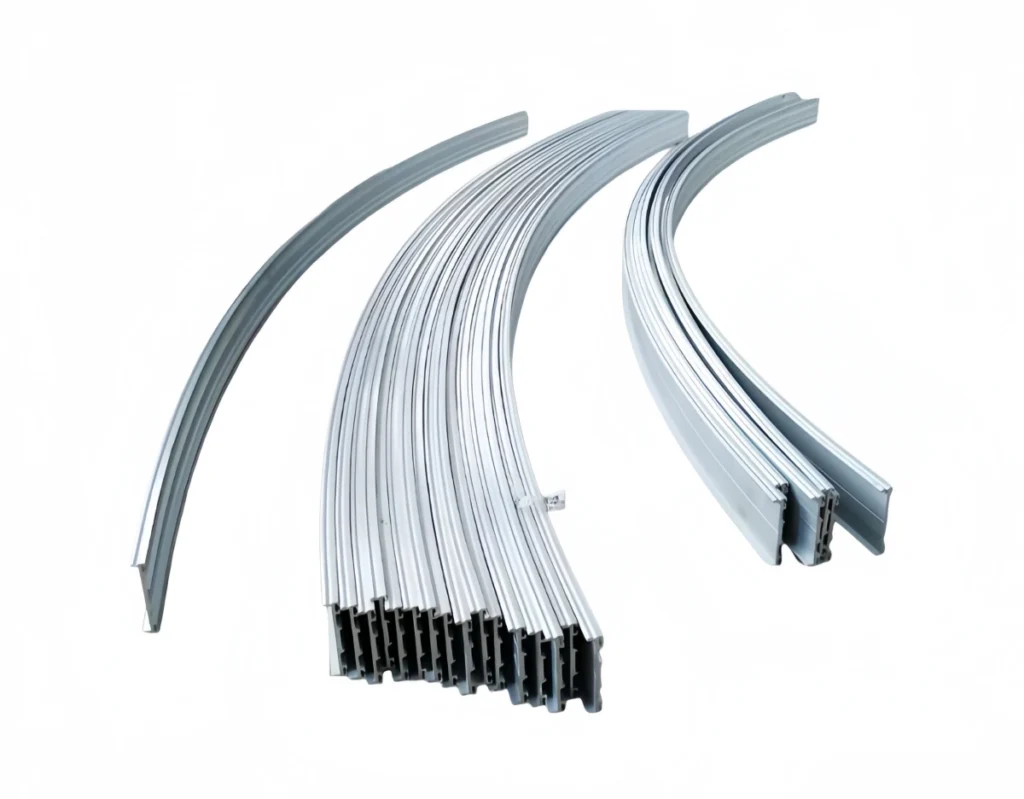
As industries move toward “Green Manufacturing” and “Electric Mobility,” the role of aluminum profile stretch bending will only grow. By mastering the synergy between tension control, thermal management, and CAE-driven springback compensation, manufacturers can produce components that are lighter, stronger, and more precise than ever before.
For companies looking to optimize their production, investing in CNC Multi-Axis Stretch Bending machines is the path forward. These systems allow for real-time adjustments, ensuring that every piece—from the first to the thousandth—meets the rigorous tolerances required in today’s global market.