Адрес
304 Северный кардинал
Улица Дорчестер Сентер, MA 02124
Рабочие часы
Понедельник - пятница: 7AM - 7PM
Выходные: 10AM - 5PM
Адрес
304 Северный кардинал
Улица Дорчестер Сентер, MA 02124
Рабочие часы
Понедельник - пятница: 7AM - 7PM
Выходные: 10AM - 5PM
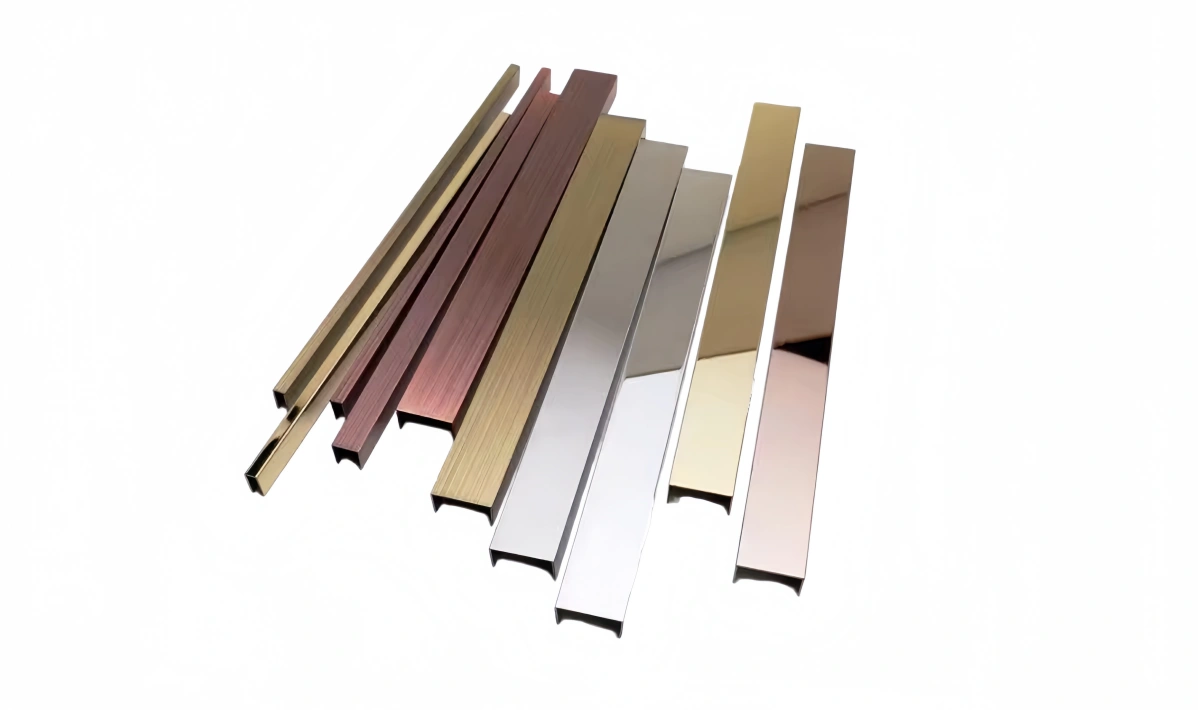
As an old saying goes, “Constant effort yields lasting success.” This timeless philosophy perfectly applies to the surface treatment of metal materials. Every ordinary metal workpiece can achieve a flawless, mirror-like glossy finish through meticulous and repeated polishing processing. Among various metal surface treatment technologies, aluminum profile polishing stands out as a delicate and practical craft that maximizes the original metallic texture and luster of aluminum profiles. Unlike conventional oxidation, spraying, and sandblasting treatments, aluminum profile polishing focuses on refining the surface texture of raw aluminum materials, removing surface defects, and restoring pure, mirror-grade metallic brightness that cannot be replicated by other processing methods.
ALUT, a professional manufacturer of high-quality aluminum profiles, boasts a full set of mature surface treatment processes. Aluminum profile polishing is one of its refined core processes. Although this craft is not as widely used as conventional surface treatments due to its strict technical requirements and complex operation, its final mirror-like polishing effect has become an irreplaceable advantage in high-end aluminum profile applications. In this in-depth guide, we will take you into the professional polishing workshop of ALUT, fully explore the complete workflow of aluminum profile polishing, core technical requirements, key influencing factors, and industrial application value, and comprehensively explain how ordinary aluminum profiles are polished into mirror-bright finished products.
High-quality mirror polishing results are based on qualified aluminum profile blanks. The quality of the original aluminum profile is the primary prerequisite for successful aluminum profile polishing, and unqualified raw materials can never achieve flawless mirror effects even with sophisticated polishing technology. In industrial production, the aluminum profiles selected for polishing processing are all extruded and artificially aged finished blanks. The aging and extrusion process stabilizes the internal molecular structure of aluminum profiles, eliminates internal stress, and avoids surface deformation, warping or uneven texture during high-speed polishing.
Strict surface quality inspections are implemented for all aluminum profiles before polishing. Qualified polishing blanks must have smooth and flat surfaces without obvious concave grooves, pits, scratches, oxidation spots, and extrusion texture defects. Extrusion lines are the most common surface problem of original aluminum profiles; deep and dense extrusion lines will increase the difficulty of polishing and even lead to incomplete polishing and residual texture, affecting the final gloss. In addition, the flatness and processing area of aluminum profiles directly determine the polishing difficulty and finished product effect. Large-area, flat and regular aluminum profile surfaces are easier to polish uniformly, with more consistent gloss and fewer dead corners. In contrast, aluminum profiles with small, irregular, curved or narrow processing surfaces have complex stress conditions during polishing, which are prone to uneven polishing, local over-polishing or missing polishing, putting forward higher requirements for equipment accuracy and workers’ operation skills.
It is worth noting that aluminum profile polishing belongs to the precision mechanical pretreatment process in the entire surface treatment system, rather than the final processing procedure. After completing the mirror polishing process, the polished aluminum profiles will be sent to the oxidation and coloring production line for secondary treatment. The smooth and flat polished surface can effectively improve the adhesion uniformity of the oxide film and color coating, making the subsequent oxidation coloring effect more delicate, uniform and wear-resistant, and greatly improving the overall grade and service life of aluminum profile products.
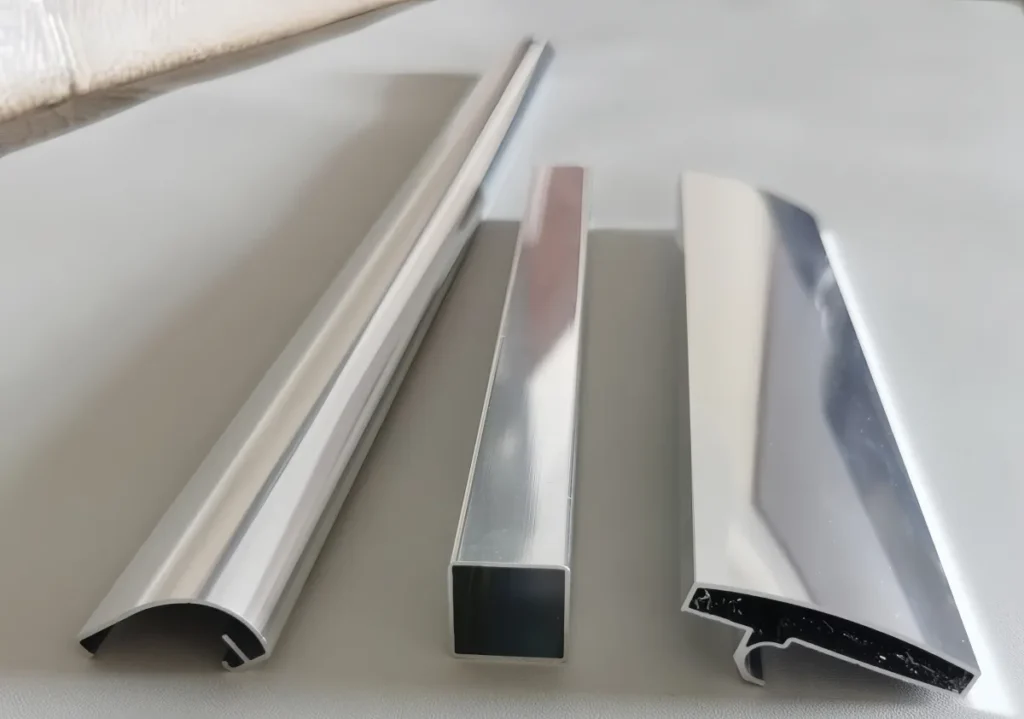
Aluminum profiles are mostly long-strip industrial profiles with slender and regular structural characteristics, which cannot be processed by universal metal polishing equipment. Therefore, professional and customized aluminum profile polishing machines are essential core equipment in the polishing workshop. This special polishing equipment is professionally optimized for the structural characteristics, material hardness and surface processing requirements of aluminum profiles, overcoming the problems of low efficiency, uneven polishing and easy damage to profile edges of traditional polishing equipment.
The core component of the aluminum profile polishing machine is the polishing wheel, and cotton polishing wheels are the most mainstream matching accessory for aluminum polishing. Compared with wool wheels, abrasive cloth wheels and other types of polishing wheels, cotton polishing wheels have soft texture, fine friction texture and moderate hardness, which can effectively avoid scratching the soft aluminum surface while removing surface blemishes. It can achieve fine grinding and mirror finishing on aluminum profiles, and is the best choice for high-precision mirror polishing.
The entire polishing process is intelligently controlled by the equipment console. Professional operators can flexibly adjust the operating speed, friction frequency and running track of the polishing wheel according to the size, thickness, surface defect degree and processing requirements of different aluminum profiles. Precise parameter adjustment is the key to consistent polishing quality of batch products. In addition, applying professional polishing wax to the polishing wheel in real time during operation is a crucial detail that determines the final mirror effect. Polishing wax contains fine abrasive particles and lubricating components, which can assist the polishing wheel in finely grinding the aluminum surface, remove tiny burrs and micro-textures, and form a smooth and bright protective layer on the profile surface. The dosage and uniform coating of polishing wax directly affect the depth, uniformity and transparency of the final metallic luster of aluminum profiles.
During high-speed operation, the polishing wheel generates intense friction with the surface of the aluminum profile, which will rapidly raise the local surface temperature of the aluminum profile. Aluminum is a metal material with low melting point and good thermal conductivity. Excessively high temperature will cause local softening of the aluminum surface, resulting in surface deformation, scratches or dim luster. Therefore, the professional aluminum profile polishing machine is equipped with a heat dissipation and constant temperature system, which can effectively control the processing temperature, ensure the stability of the aluminum surface structure during high-speed friction, and guarantee the uniformity and flatness of the polishing effect.
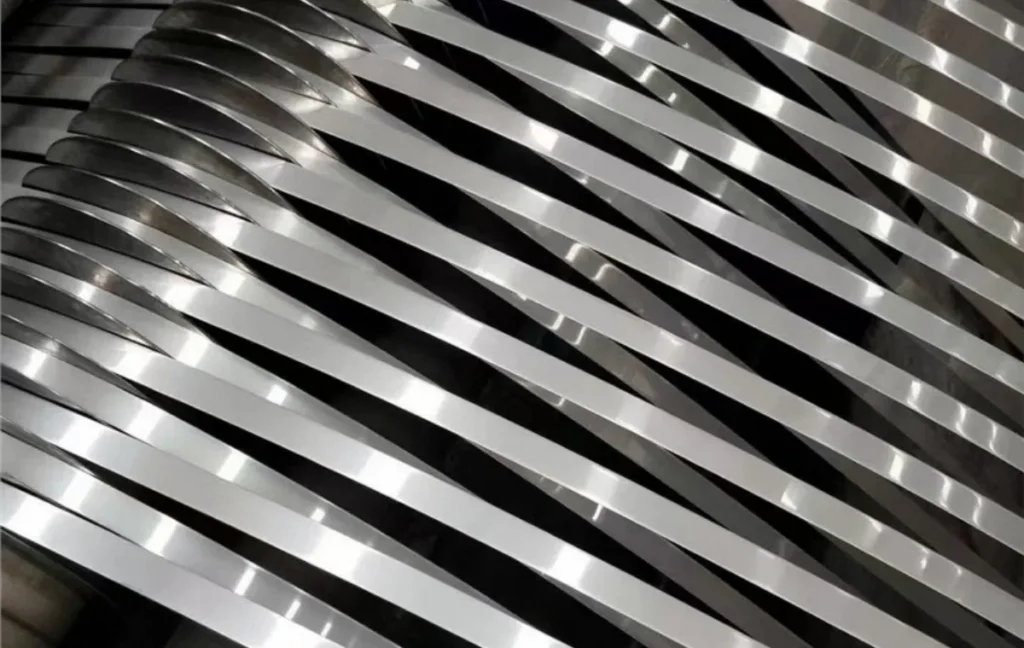
Although modern polishing equipment realizes mechanized operation, aluminum profile polishing is still a craft that tests the carefulness, patience and professional experience of workers. Mechanical equipment completes the main friction and grinding work, but the fine control of details, judgment of polishing effect and adjustment of processing status all rely on the manual operation of senior polishing masters. A qualified polishing master needs years of production experience to master the subtle operation rules and avoid various polishing defects.
The polishing operation process is tedious and rigorous, just like frying tofu in daily cooking. It requires constant observation, turning and adjustment, and impetuosity will directly lead to unqualified finished products. In the formal processing process, the master first fixes the qualified aluminum profile blank on the equipment workbench, adjusts the equipment parameters according to the product specifications, and starts the preliminary polishing work. After polishing one side of the profile, the master needs to stop the machine regularly to check the surface effect carefully, observe whether there are residual extrusion lines, tiny scratches or uneven gloss, and replenish polishing wax for the polishing wheel in time to ensure the continuous stability of the polishing state.
Subsequently, the master will manually flip the aluminum profile to polish the other side, and repeat the checking and waxing process until all flat surfaces, side edges and two end faces of the aluminum profile reach the mirror polishing standard. Unlike ordinary mechanical processing that pursues speed, aluminum profile polishing emphasizes slow grinding and fine polishing. Only through uniform and repeated fine friction can the tiny uneven layers on the aluminum surface be completely removed, presenting a pure mirror metallic texture.
The post-processing work after polishing is also indispensable. After the overall polishing is completed, the master will conduct a full-dimensional inspection of all surfaces and dead corners of the aluminum profile to ensure no missing polishing or defective parts. After confirming that the polishing effect is up to standard, the aluminum profile will be unloaded and placed in a special material frame. Since a small amount of polishing wax oil stains will remain on the surface of the polished profile, workers will sprinkle talcum powder on the stained parts and wipe the surface repeatedly with clean soft cloths to completely remove oil stains, residual wax and tiny dust particles. After thorough cleaning and natural air drying, the entire aluminum profile polishing process is officially completed.
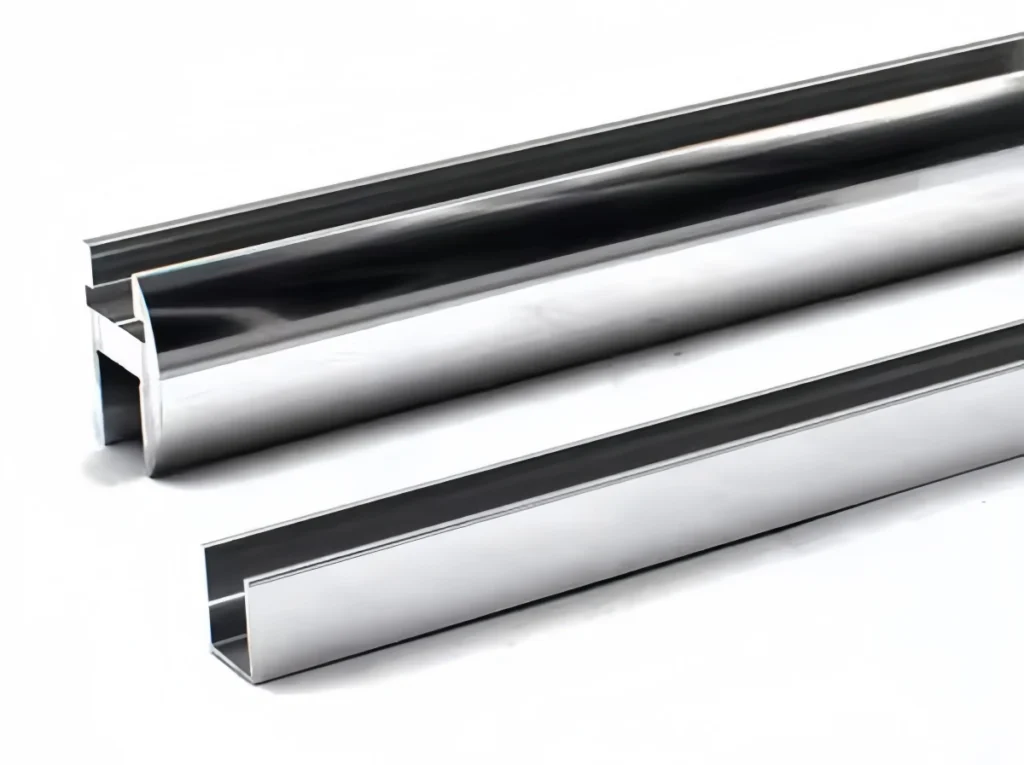
After professional polishing treatment, the surface of ordinary aluminum profiles can achieve a high-definition mirror effect, which can clearly reflect objects and outlines just like a mirror, with bright and pure metallic luster and strong three-dimensional texture. Compared with other metal polishing and aluminum surface treatment processes, aluminum profile mirror polishing has unique technical characteristics and application advantages. Different from sandblasting that presents matte texture, oxidation that forms single-color protective film, and spraying that covers metallic texture, polishing completely retains the original metallic sense of aluminum materials, removes surface impurities and defects, and maximizes the aesthetic feeling of aluminum’s own metal texture.
At present, polishing technology has been widely used in the surface treatment of metal, stone, wood, glass and synthetic materials in the industrial field, but aluminum profile polishing has exclusive craft pertinence. Due to the soft texture, active chemical properties and easy oxidation characteristics of aluminum, its polishing process parameters, wheel selection, polishing wax matching and operation methods are completely different from stainless steel, iron and other metal polishing. The targeted refined process makes aluminum profile polishing more delicate in effect and higher in appearance grade.
High-gloss mirror polished aluminum profiles developed and produced by ALUT are widely used in high-end architectural decoration, furniture accessories, automotive interior parts, electronic equipment casings, industrial precision parts and other fields. Its mirror-like bright surface can improve the overall grade of products, while the smooth polished surface effectively reduces surface adhesion of dust and dirt, enhances corrosion resistance and wear resistance, and prolongs the service life of aluminum profile products.
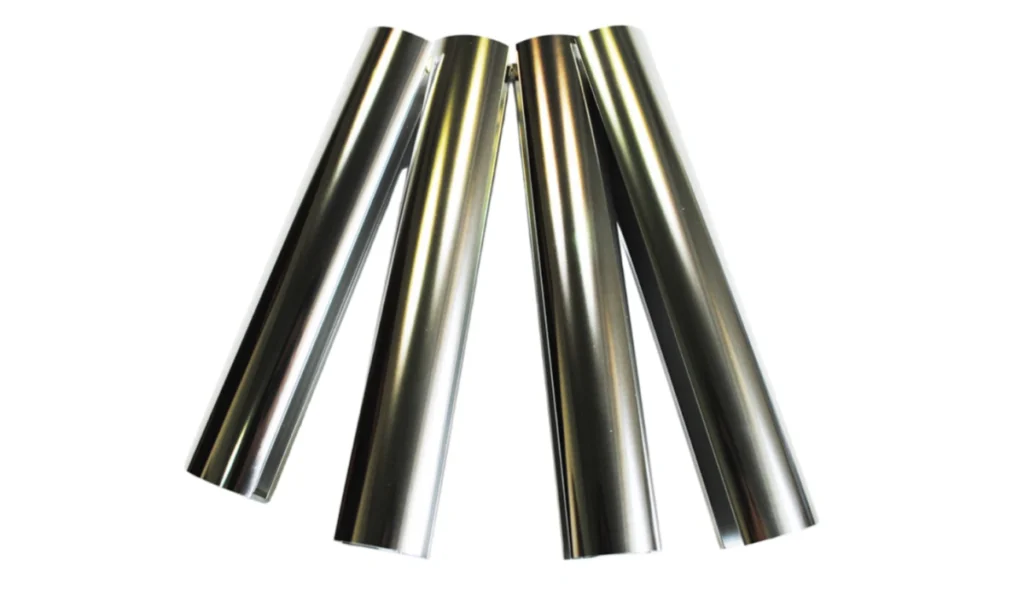
The entire process of aluminum profile polishing interprets the simple and profound truth: high-quality products are always polished by time and patience. From the selection of raw material blanks, precise equipment debugging, repeated fine grinding by workers to careful post-cleaning, every link requires rigorous adherence to standards and persistent dedication. There are no quick shortcuts to high-standard mirror polishing effects, only layer-by-layer grinding and repeated refinement.
This is also consistent with the growth law of everything in life, study and work. All excellent achievements and perfect results are derived from the perseverance of “polishing repeatedly and refining constantly”. Only by abandoning impetuosity, adhering to careful polishing and persistent accumulation, can we polish ordinary raw materials into high-quality finished products, and also polish our own abilities and achievements to present amazing and outstanding results.