Адрес
304 Северный кардинал
Улица Дорчестер Сентер, MA 02124
Рабочие часы
Понедельник - пятница: 7AM - 7PM
Выходные: 10AM - 5PM
Адрес
304 Северный кардинал
Улица Дорчестер Сентер, MA 02124
Рабочие часы
Понедельник - пятница: 7AM - 7PM
Выходные: 10AM - 5PM
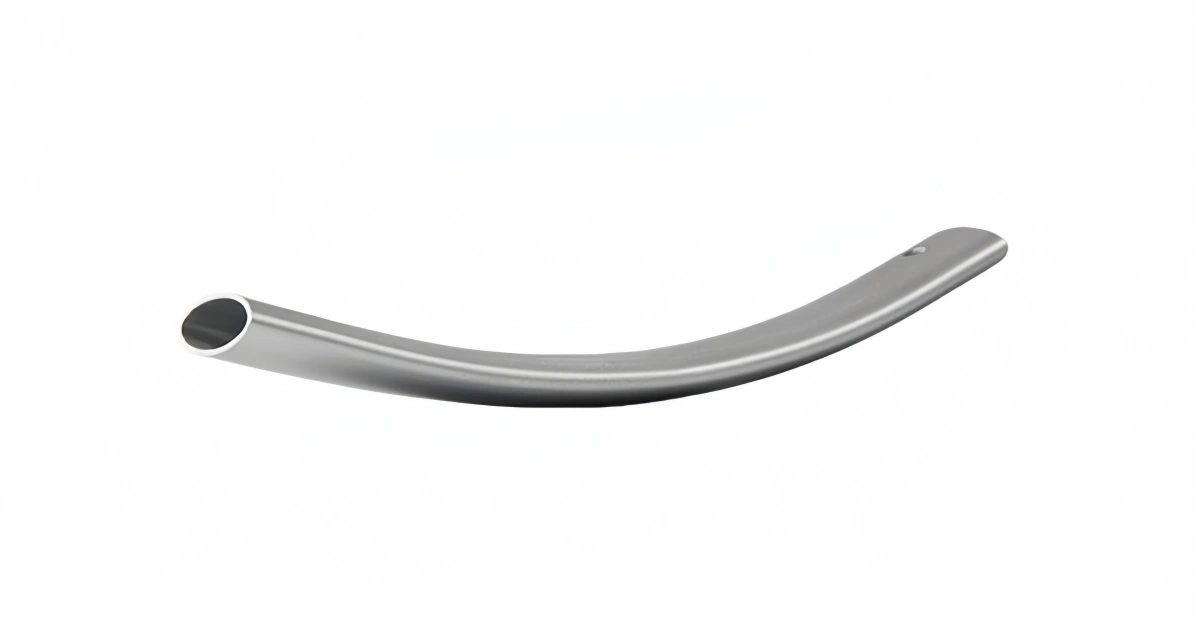
In the contemporary landscape of industrial manufacturing and architectural design, the requirement for complex, high-strength curved components has reached unprecedented levels. To meet these demands, Stretch Bending has emerged as the premier technology for shaping extrusions without sacrificing structural integrity or aesthetic quality. Unlike traditional bending methods—which often result in surface deformation, wall thinning, or internal wrinkling—this specialized process utilizes controlled longitudinal tension to guide the metal into its final form.
As we move toward a future defined by aerodynamic efficiency in transportation and organic fluidity in architecture, understanding the mechanical depths of Aluminum Profile Stretch Bending becomes essential for engineers and designers alike. This guide provides an exhaustive analysis of the techniques, material sciences, and quality standards that define modern stretch bending, offering the technical insights necessary to master this critical fabrication process in a competitive global market.
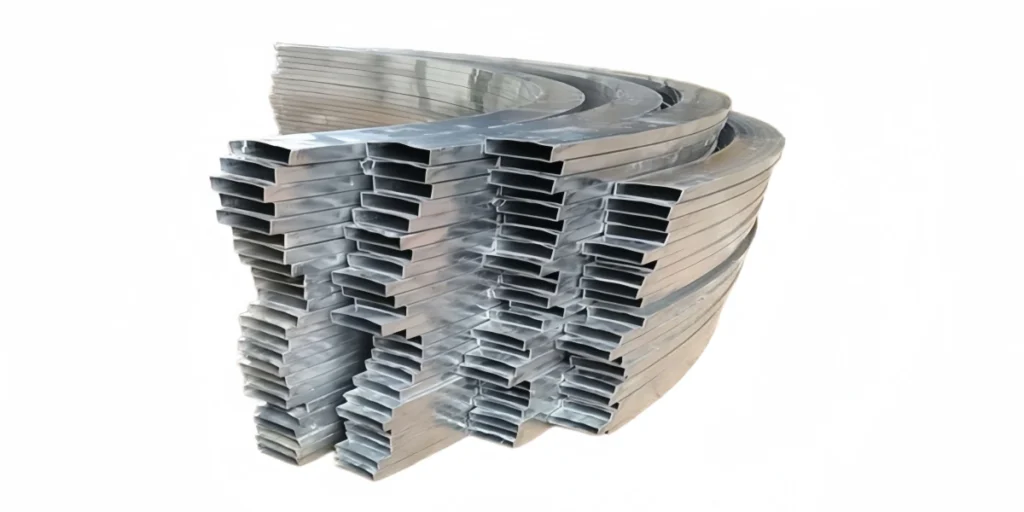
At its core, Profile Stretch Bending is a sophisticated mechanical operation that fundamentally alters how metal reacts to force. In a conventional bending scenario, such as roll or press bending, the material is subjected to localized pressure that creates a “neutral axis” within the profile. This results in the inner radius being crushed under compression while the outer radius is stretched under tension. This imbalance is the primary cause of structural failure, leading to buckling or “kinking” of the profile walls, which compromises the component’s safety and visual appeal.
Aluminum Stretch Bending solves this physical dilemma by applying a powerful hydraulic pull at both ends of the extrusion before and during the bending cycle. By stretching the aluminum until it reaches its “plastic state”—the point where it can be permanently reshaped without fracturing—the machine effectively eliminates the compression zone. This tension shifts the neutral axis to the innermost edge or even outside the profile geometry. Consequently, the entire cross-section of the aluminum remains in a state of tension, ensuring that even complex hollow extrusions maintain their original dimensions without collapsing.
Furthermore, the precision of Stretch Bending significantly minimizes “springback,” which is the tendency of metal to return to its original shape after the forming force is removed. Because the material is pulled beyond its elastic limit into the plastic zone, the residual stresses that cause springback are neutralized. This allows for the creation of parts that match CAD designs with sub-millimeter accuracy. This level of mechanical control is why Aluminum Profile Stretch Bending is the only viable choice for high-precision industries where dimensional consistency is non-negotiable across large production runs.
The success of Aluminum Profile Stretch Bending is deeply intertwined with the metallurgical properties of the alloy being utilized. Not all aluminum is created equal; the chemistry and heat-treatment state of the extrusion dictate its “formability” and final strength. Most industrial projects rely on the 6xxx series (Magnesium-Silicon) or the 7xxx series (Zinc-based) alloys. For instance, 6063 aluminum is the industry standard for architectural applications due to its excellent surface finish, while 6061 is preferred for structural components in the automotive and marine sectors.
A critical factor in Stretch Bending is the “Temper” or hardness of the metal. If a profile is in the T6 state (fully aged), it possesses high yield strength but very low elongation, making it prone to snapping during the stretching phase. To overcome this, expert fabricators often perform the Aluminum Profile Stretch Bending process while the material is in a T4 state (naturally aged and more ductile). Once the desired curve is achieved, the part is then artificially aged in a furnace to reach the T6 hardness. This dual-stage process ensures that the finished curve has both the required geometry and the maximum possible structural hardness.
Furthermore, for high-performance aerospace applications, 7075 aluminum is frequently used. This alloy is notoriously difficult to shape due to its extreme rigidity. In these cases, the Aluminum Profile Stretch Bending process may require “Solution Heat Treatment” immediately prior to bending to temporarily increase the material’s ductility. Understanding these metallurgical transitions is vital for preventing micro-fractures during the stretch. By precisely matching the tensile force of the Aluminum Profile Stretch Bending machine to the specific yield strength of the alloy, manufacturers can push the boundaries of what is possible in metal forming.
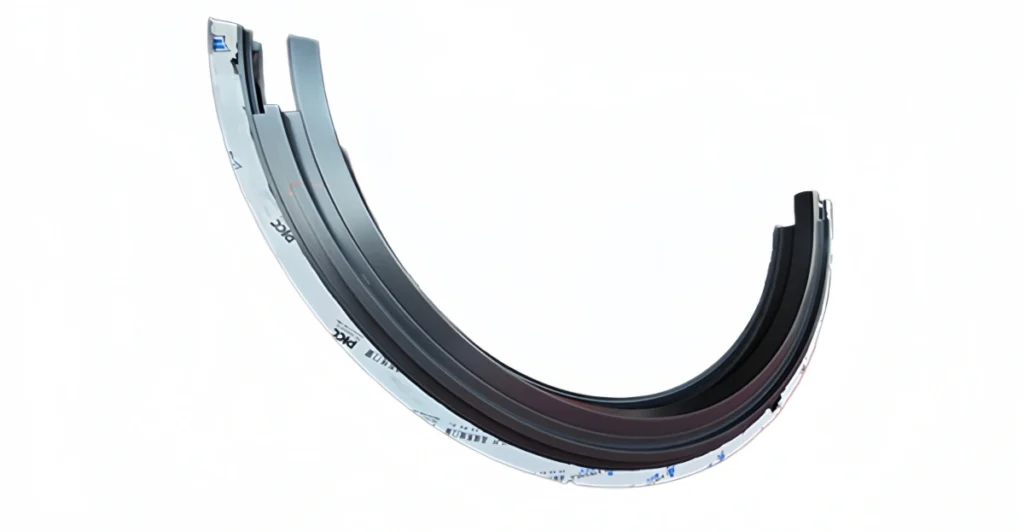
Modern manufacturing has been revolutionized by the transition from manual hydraulic operation to CNC (Computer Numerical Control) integration. In the past, Aluminum Profile relied heavily on the operator’s experience and “feel,” which often led to inconsistencies between batches. Today, advanced Aluminum Profile Stretch Bending machines are equipped with multi-axis control systems that monitor the tensile load, the swing-arm angle, and the material’s resistance in real-time. This level of automation ensures that every part is a perfect replica of the digital master.
One of the most significant advantages of CNC-driven Aluminum Profile Bending is the ability to create “variable radius” curves. Traditional machinery is often limited to a single, constant arc. However, with CNC software, a single aluminum extrusion can transition from a tight 300mm radius to a sweeping 10,000mm radius within a single piece. This capability is essential for modern “organic” architectural facades, such as those seen in futuristic skyscrapers or sports stadiums, where the building’s skin must flow seamlessly across complex 3D surfaces.
Moreover, CNC systems utilize a “feedback loop” to manage the inherent variations in aluminum batches. Even if two profiles are from the same alloy, slight differences in the extrusion process can affect their elasticity. The CNC Aluminum Profile Bending machine detects these variations through high-resolution sensors and adjusts the hydraulic pressure on the fly. This “adaptive forming” minimizes waste and ensures that even the most complex geometries are achieved with zero defects. By utilizing Aluminum Profile Bending with CNC precision, manufacturers can achieve a level of repeatability that was once thought impossible in metal fabrication.
Despite the superiority of the process, Aluminum Stretch Bending is not without its technical hurdles. One of the most prevalent issues is “Sectional Distortion,” where the hollow chambers of a complex extrusion tend to flatten or cave in under the pressure of the curve. To combat this, senior engineers employ internal supports known as mandrels. These mandrels, which can be made of flexible steel links or high-density polymers, fill the internal cavity of the profile during the Aluminum Profile Stretch Bending cycle, acting as an internal skeleton that preserves the profile’s shape.
Another significant challenge is surface “galling” or scoring. When the aluminum is pulled across a steel die at high pressure during Aluminum Profile Stretch Bending, the friction can cause the metal to tear or scratch. This is particularly problematic for architectural components that require a flawless anodized finish. To resolve this, specialized lubricants and die coatings—such as Nylon, Delrin, or polished chrome—are used to create a friction-less interface. This ensures that the Aluminum Profile Bending process leaves the surface as smooth as it was when it left the extrusion mill.
Finally, we must consider the “Percentage of Stretch.” If the material is pulled too far, it can develop a grainy surface texture known as “orange peel,” or in extreme cases, it can suffer from “necking,” where the wall thickness becomes dangerously thin. Expert calibration of the Profile Stretch Bending parameters is required to ensure the stretch remains within the 1% to 3% range. This careful balancing act ensures that the structural integrity and the aesthetic finish of the Profile Stretch Bending component are both maintained to the highest industrial standards.
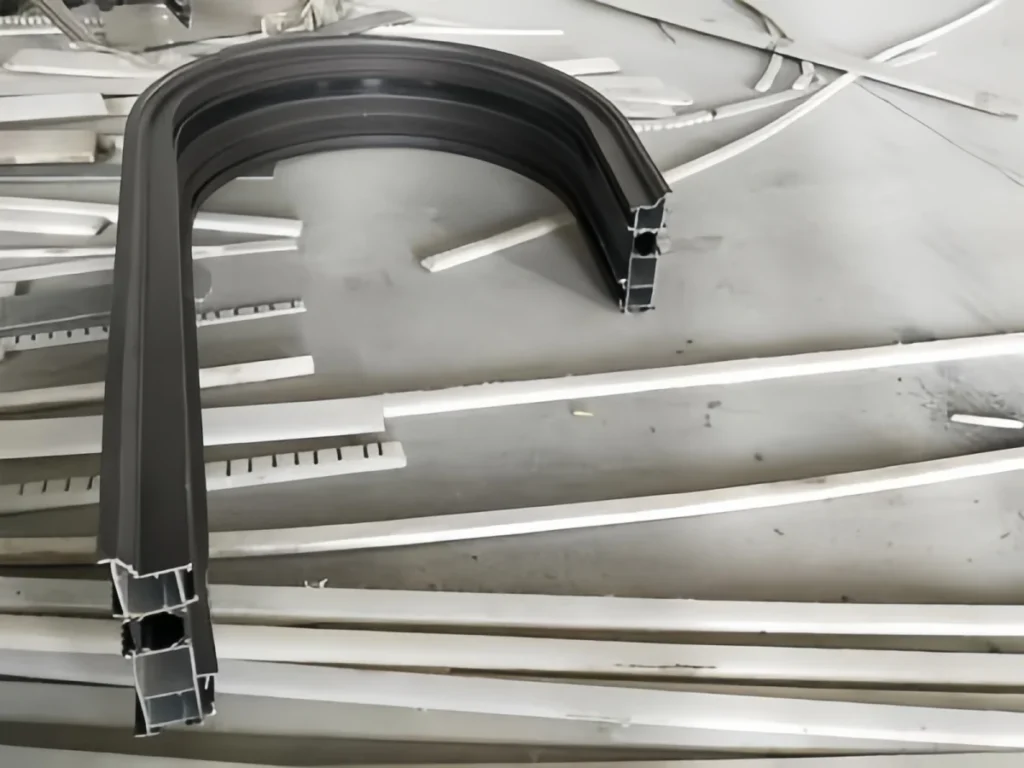
The global shift toward sustainability and lightweighting has placed Aluminum Profile Stretch Bending at the heart of the Electric Vehicle (EV) and aerospace industries. In the EV sector, weight reduction is the primary strategy for increasing battery range. This has led to the widespread adoption of aluminum space frames and battery enclosures. These components require complex, high-strength curves that can absorb massive amounts of energy during a collision. Aluminum Profile Stretch Bending is the only method capable of producing these parts with the consistent wall thickness required for automotive safety ratings.
In the aerospace industry, the requirements for Aluminum Profile Stretch Bending are even more stringent. Aircraft fuselage frames, wing stringers, and seat tracks are often enormous components that must withstand extreme cyclic loading and temperature fluctuations. The precision of Aluminum Profile Stretch Bending ensures that there are no “stress risers” or internal wrinkles that could lead to fatigue cracking over the aircraft’s lifespan. By utilizing this technology, aerospace manufacturers can create lighter, more aerodynamic structures that reduce fuel consumption and carbon emissions.
Furthermore, the high-speed rail industry relies heavily on Aluminum Profile Stretch Bending for the construction of train car bodies and aerodynamic nose cones. Because these trains travel at speeds exceeding 300 km/h, the structural frames must be perfectly contoured to reduce wind resistance. The ability of Aluminum Profile Stretch Bending to handle massive extrusions while maintaining millimeter-level accuracy is why it remains the gold standard for modern transportation infrastructure. As these industries continue to innovate, the demand for high-quality Aluminum Profile Stretch Bending services will only continue to grow.
In high-stakes industries, the final part produced via Aluminum Profile Stretch Bending must be verified through a rigorous quality assurance (QA) protocol. Dimensional accuracy is checked using Coordinate Measuring Machines (CMM) and 3D laser scanners. These tools compare the physical Aluminum Profile Stretch Bending component against the original CAD model, ensuring that every radius, angle, and length is within the specified tolerances. This is crucial for parts that will be integrated into larger assemblies, where even a 1mm deviation can cause significant fitment issues.
Beyond dimensions, the internal health of the metal must be confirmed. Non-Destructive Testing (NDT) techniques, such as Ultrasonic Testing or Dye Penetrant Inspection, are often employed after Aluminum Profile Stretch Bending to look for micro-cracks or internal voids that are invisible to the naked eye. Additionally, hardness testing (using the Webster or Barcol scales) is performed to verify that the aluminum has reached its intended temper after any post-bending heat treatment. This ensures that the Aluminum Profile Stretch Bending process has not compromised the material’s mechanical strength.
Finally, visual and surface integrity inspections are conducted to ensure the part is ready for its final finish, whether that be powder coating, painting, or anodizing. For architectural projects, where the Stretch Bending component is a visible design element, the surface must be free of tool marks, ripples, or shadows. By adhering to these strict QA standards, manufacturers can guarantee that every piece of Aluminum Profile Stretch Bending work meets the safety and aesthetic requirements of the world’s most demanding projects.
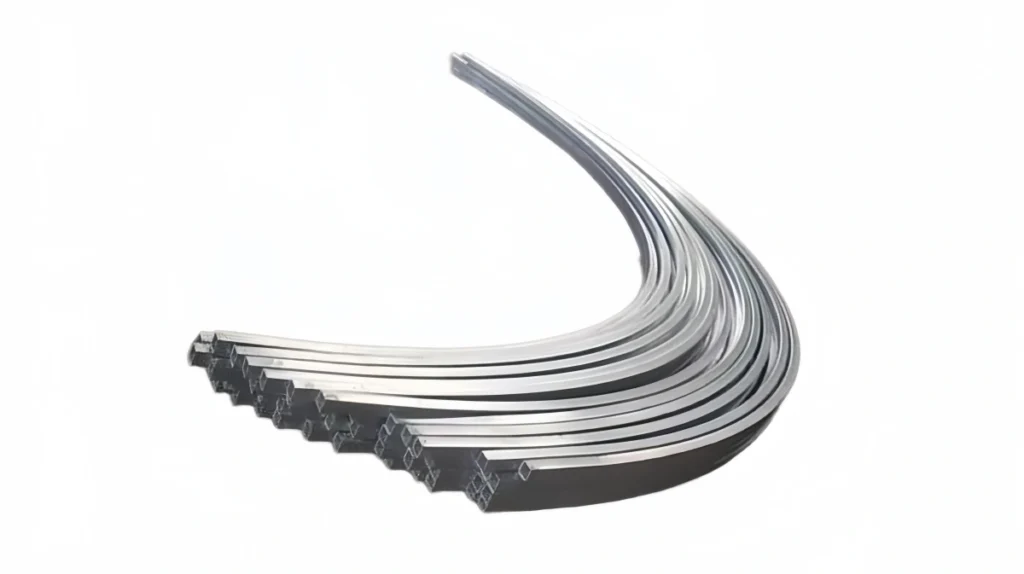
As we look toward the future, the integration of Industry 4.0 and Artificial Intelligence (AI) is set to further refine the Stretch Bending process. We are seeing the rise of “Digital Twins,” where a virtual simulation of the specific aluminum batch is tested before the actual bending begins. This allows for predictive maintenance of the machines and near-zero scrap rates. The evolution of Stretch Bending will continue to push the boundaries of design, allowing for even more extreme geometries and stronger, lighter structures.
The primary benefit is the elimination of compression defects. Aluminum Profile Stretch Bending keeps the entire profile under tension, preventing wrinkles on the inner radius and maintaining the internal geometry of hollow profiles, which roll bending often fails to do.
Yes, but it requires specialized handling. Since 7075 is very brittle in its T6 state, it is often bent during a “Solution Heat Treatment” window or in an annealed state to prevent cracking during the Aluminum Profile Stretch Bending cycle.
When performed correctly with proper lubrication and polished dies, the process maintains a high-quality surface finish. It is generally recommended to perform Aluminum Profile Stretch Bending before anodizing or powder coating to avoid surface crazing.
Tolerances depend on the part length and complexity, but high-end CNC Aluminum Profile Stretch Bending can typically achieve dimensional accuracy within ±0.5mm to ±1.0mm and angular accuracy within ±0.5 degrees.