주소
304 북쪽 추기경
세인트 도체스터 센터, MA 02124
근무 시간
월요일~금요일: 오전 7시~오후 7시
주말: 주말: 오전 10시 - 오후 5시
주소
304 북쪽 추기경
세인트 도체스터 센터, MA 02124
근무 시간
월요일~금요일: 오전 7시~오후 7시
주말: 주말: 오전 10시 - 오후 5시
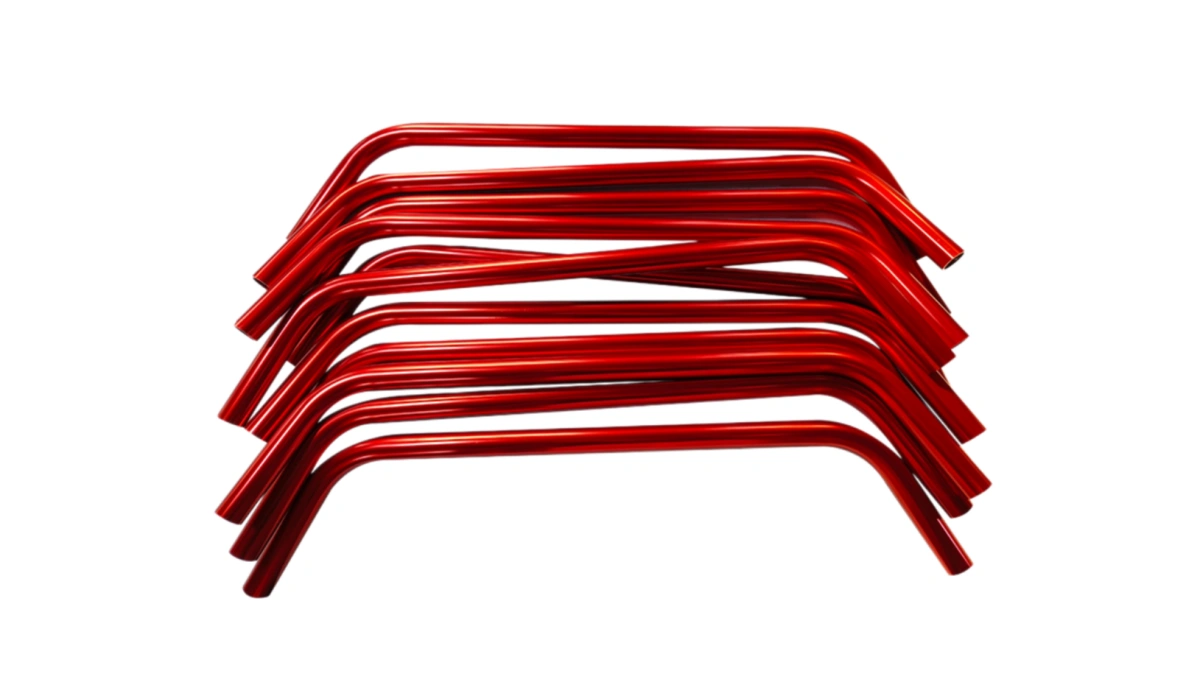
Modern industrial manufacturing increasingly relies on customized metal forming solutions to produce lightweight, high-strength structural components for diverse sectors. Among various aluminum processing techniques, aluminum profile stretch bending stands out as a precision secondary forming method for extruded aluminum materials. This professional processing method transforms standard straight aluminum profiles into tailored curved, arched, and three-dimensional shapes that traditional bending methods cannot achieve.
Unlike basic press bending and roll bending that easily cause springback, wrinkling, and section deformation, this mature aluminum profile stretch bending technology combines precise tension and bending force. It maintains the original mechanical performance and smooth surface finish of aluminum materials while delivering high-precision finished parts. This article systematically introduces the basic knowledge, core processing technology, standard operation procedures, quality control keys, and mainstream industrial applications of aluminum profile stretch bending, providing professional references for industrial engineers, procurement personnel, and processing manufacturers.
Aluminum profile stretch bending is a precision plastic forming process completed by professional industrial forming equipment. Its core working principle adopts a scientific two-step forming logic combining pre-tensioning and synchronous bending. During production, equipment first applies stable axial tension to stretch aluminum profiles to a micro-yield state. Then, continuous radial bending force is applied under constant tension to shape the target radian and angle.
This technical method effectively balances the internal stress of metal materials. The tensile stress generated during processing offsets the compressive stress on the inner bending arc, which is the main cause of processing defects in traditional aluminum bending. By optimizing internal stress distribution, the technology avoids common problems such as surface wrinkling, concave distortion, section collapse, and irregular deformation, ensuring accurate dimensional tolerance and stable structural integrity of curved aluminum parts.
All aluminum alloy materials have natural elasticity and ductility. Conventional bending processes will produce obvious elastic springback after force unloading, leading to inaccurate bending radii and unqualified finished products. With the help of pre-stretching synchronization technology, aluminum profile stretch bending locks aluminum materials in a stable plastic deformation state. It greatly reduces elastic recovery, ensures consistent forming effects, and becomes an indispensable core process for high-precision curved aluminum component manufacturing.
This aluminum profile stretch bending technology features excellent compatibility and can adapt to almost all mainstream extruded aluminum profiles in the market. It covers hollow tubes, solid bars, custom special-shaped profiles, square tubes, round tubes, and modular frame profiles commonly used in construction and mechanical manufacturing. It supports multiple aluminum alloy series with different performance attributes to meet diverse industrial scenario demands.
In terms of conventional materials, 6000-series aluminum alloys including 6063, 6061, and 6005 are the most widely used. These materials have balanced hardness and ductility, with low processing defect rates and high cost performance, suitable for architectural decoration and general industrial equipment. High-strength 7075 aviation aluminum and corrosion-resistant 5052 aluminum are also applicable, but require stricter parameter control during processing.
Material performance directly affects final forming quality. High-hardness aviation aluminum has poor ductility, which is prone to tensile cracking if parameters are not properly adjusted. Thin-walled hollow profiles are easy to flatten and deform during bending, so professional technicians need to optimize tension and operating speed according to material characteristics to ensure qualified forming effects.
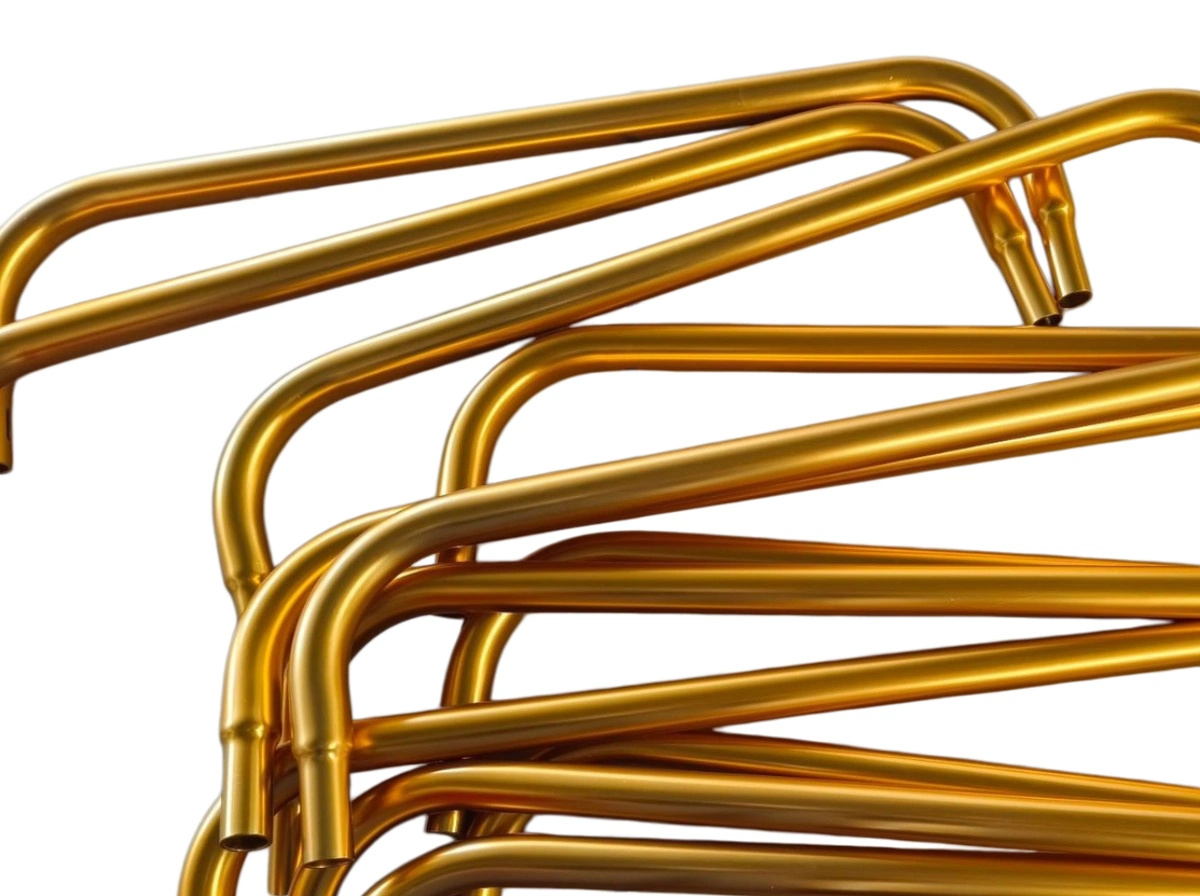
With the continuous improvement of industrial precision standards, aluminum profile stretch bending has evolved and derived three mature and differentiated process systems tailored for industrial mass production. Each process is tailored for different profile specifications, bending radians, and application precision requirements, covering low, medium, and high-end customized processing scenarios.
Rotary draw aluminum profile stretch bending is the most widely used precision process in high-end manufacturing. The equipment fixes both ends of aluminum profiles and applies stable axial tension. It relies on rotary winding of custom precision molds to complete curved forming. The finished products feature ultra-smooth surfaces, uniform radian, and angle accuracy up to ±0.3 degrees. This process is very suitable for small-radius, high-precision components such as automotive decorative frames and aviation structural parts.
Three-roll and four-roll aluminum profile stretch bending processes are mainly used for large-size and large-radius profile processing. The three-roll structure realizes gradual low-stress forming, which will not damage the cross-sectional structure of profiles. The upgraded four-roll structure adds adjustable side rollers to effectively inhibit profile torsion and lateral deformation. These two processes are the preferred solutions for large building curtain wall profiles and solar support frame components.
Custom die aluminum profile stretch bending belongs to high-end composite processing technology. It relies on integral custom molds and synchronous tension control systems to complete multi-angle and multi-radius composite forming. It can process complex 3D curved profiles that cannot be completed by conventional processes, fully meeting the ultra-high precision requirements of high-speed rail and aerospace equipment parts.
To ensure stable product quality and low defect rate, professional aluminum profile stretch bending production follows a standardized six-step workflow. The complete process includes raw material inspection, mold and fixture debugging, parameter configuration, pre-stretching forming, cooling shaping, and post-processing quality testing.
Before formal production, workers conduct comprehensive inspection on raw materials, including surface integrity, material hardness, and section specifications. Unqualified materials with cracks, uneven thickness, and hard impurities are eliminated in advance. Corresponding fixtures and bending molds are selected according to product drawings, and core parameters such as tension force, bending speed, and forming radian are precisely debugged.
In the formal forming stage, the equipment fixes the profile and applies calibrated pre-stretching force to make the material reach a micro-yield state. Then slow and uniform bending movement is carried out. After forming, constant tension is maintained for a certain period to stabilize the internal metal structure and eliminate springback.
The final stage includes cutting, deburring, surface finishing, and dimensional verification. Strict implementation of standardized procedures can effectively avoid common defects such as surface scratches, internal wrinkles, angle deviation, and profile torsion, ensuring that each batch of products meets industrial standards.
The forming quality of curved parts processed by aluminum profile stretch bending depends on three core control indicators: tension precision, bending speed matching, and mold accuracy. Tension force is the most critical parameter in the whole process. Excessive tension will cause profile wall thinning and tensile cracking, while insufficient tension will lead to springback and wrinkling, resulting in unqualified dimensional accuracy.
Bending speed needs to match the ductility characteristics of different aluminum alloys. Excessively fast speed will cause local stress concentration and material cracking, while too slow speed will greatly reduce production efficiency and increase processing costs. In addition, high-precision polished molds are essential. Smooth mold surfaces can effectively avoid scratches and orange peel texture on the profile surface, ensuring excellent surface finish of finished products.
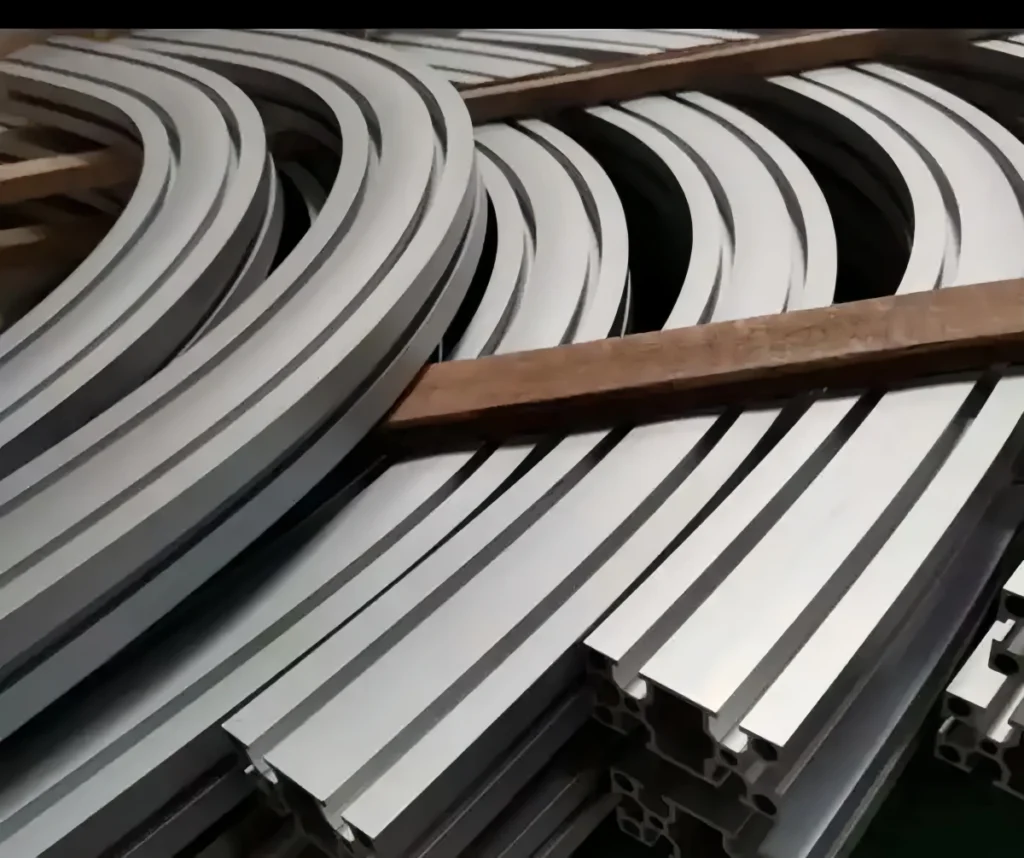
Aluminum materials have inherent advantages of light weight, high strength, and corrosion resistance. Combined with flexible curved structural design realized by stretch bending processing, curved aluminum profile components have become essential parts in many industries. With the rapid development of lightweight manufacturing, the market demand for such customized curved parts continues to grow steadily.
The construction field is one of the earliest and most mature application scenarios for aluminum profile stretch bending processing. Modern architectural design pursues personalized, streamlined, and curved modeling effects, which cannot be realized by traditional straight aluminum profiles.
Processed curved profiles are widely used in building curtain wall frames, arc door and window systems, artistic ceiling structures, corridor handrails, and landscape architecture components. The products have uniform bending radian and stable internal stress, which can adapt to various irregular building shapes.
At the same time, these profiles maintain excellent wind resistance and seismic performance, suitable for long-term outdoor use. The smooth surface is convenient for subsequent anodizing, powder spraying, and fluorocarbon coating treatments, with outstanding decorative effect and weather resistance.
The new energy vehicle industry is the fastest-growing downstream market for aluminum profile stretch bending processing. To achieve vehicle lightweighting, reduce energy consumption, and improve cruising range, new energy vehicles adopt a large number of customized curved aluminum structural parts.
These parts include battery pack frames, body support structures, roof rails, bumper brackets, and electric drive system shells. The one-time forming technology ensures high dimensional consistency and sealing performance of battery frame structures, meeting strict vehicle safety standards.
Precision forming processing eliminates section deformation and surface defects of automotive profiles, balancing structural safety and appearance aesthetics. With the continuous improvement of vehicle lightweighting standards, the application of curved aluminum parts in the automotive industry will continue to increase.
Aerospace and rail transit equipment have extremely high requirements for component precision, lightweight performance, and structural stability. Custom curved aluminum profiles processed by precision forming technology are widely used in these high-end fields.
In aerospace manufacturing, relevant products are used for aircraft interior trim frames, load-bearing support structures, and aviation equipment shells. In high-speed rail and subway manufacturing, they are applied to vehicle body structural parts, interior decorative frames, and window frame components.
The professional forming process eliminates internal residual stress of materials, ensuring that the parts will not deform or crack during long-term high-speed operation. It effectively improves the structural stability and service life of transit and aviation equipment.
In the new energy equipment field, curved aluminum profiles serve solar photovoltaic support frames, wind power equipment accessories, and energy storage equipment shells. Optimized curved structural design can adapt to the best sunlight incidence angle, improving photovoltaic power generation efficiency, while maintaining excellent wind resistance and structural stability.
In general industrial manufacturing, customized curved aluminum parts are used for automated equipment frames, production line supports, medical device shells, and intelligent equipment structural components. It realizes the integration of mechanical functionality and structural aesthetics for modern industrial equipment, meeting diversified customized production needs.
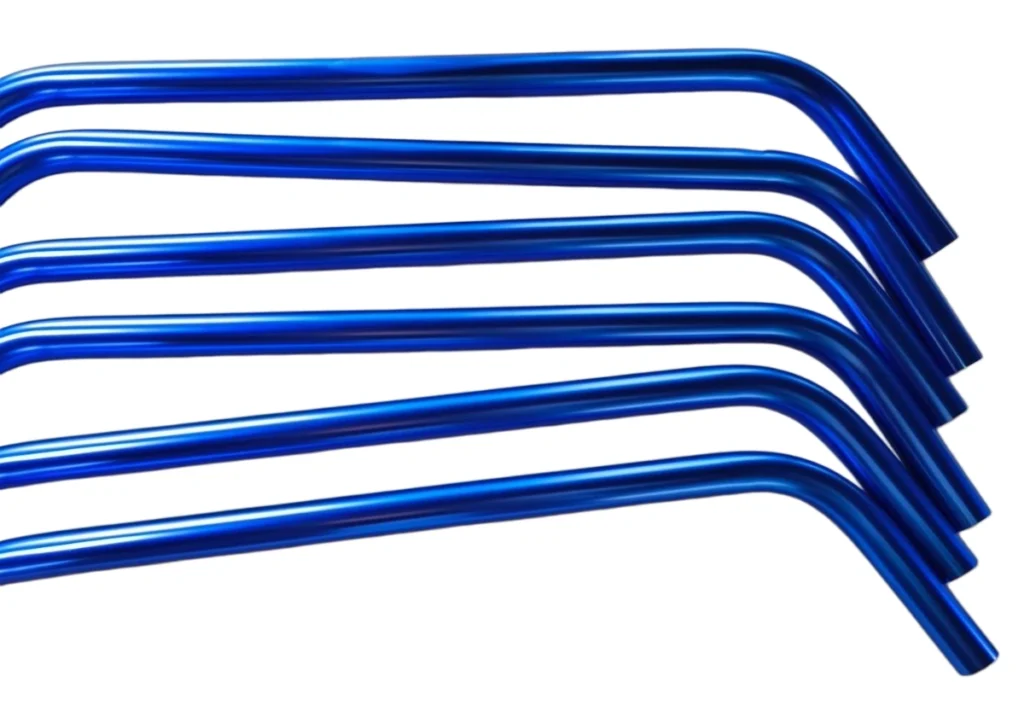
Compared with traditional press bending and pure roll bending processes, aluminum profile stretch bending technology has irreplaceable comprehensive advantages in precision manufacturing. First of all, it features ultra-high forming precision and low springback error. The pre-stretching forming mode effectively suppresses material elastic recovery, and the dimensional accuracy is 2 to 3 times higher than that of traditional processes.
Secondly, the product quality is stable with extremely low defect rate. The process avoids common problems such as profile wrinkling, inner arc collapse, and surface cracking. The cross-sectional structure of aluminum profiles remains complete after processing, and core mechanical properties are fully preserved, ensuring long-term structural safety of components.
Thirdly, the technology has strong application adaptability. It can process single-radius arcs, multi-radius composite curves, and complex 3D special-shaped structures, compatible with thin-walled, thick-walled, hollow, and solid aluminum profiles of various specifications. It can meet personalized customization needs of multiple industries.
Fourthly, the finished products have excellent surface quality. Professional fixture positioning and high-precision mold fitting avoid friction and extrusion damage. The original smooth surface of aluminum materials is retained, which is convenient for subsequent secondary surface treatment and finishing.
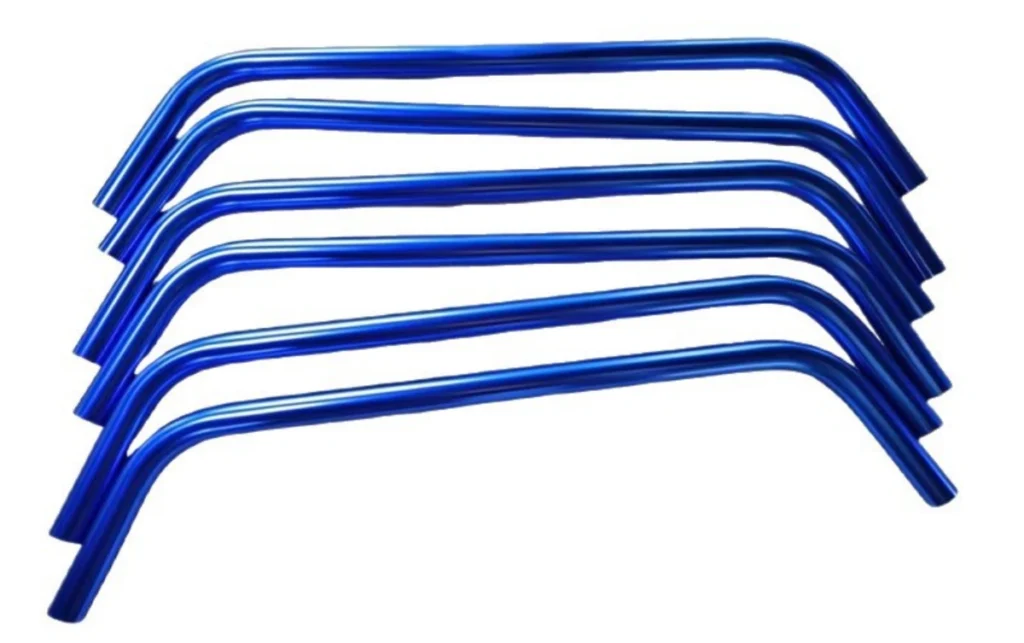
At present, the overall development direction of aluminum profile stretch bending technology is intelligent, high-precision, efficient, and green. Traditional manual and semi-automatic processing equipment is gradually replaced by fully automatic CNC forming machines. Intelligent equipment realizes one-click parameter setting, automatic forming, and real-time error correction, greatly improving production efficiency and product consistency.
With the upgrading of industrial lightweight requirements, the processing technology of high-strength alloy profiles has become a key research direction in the industry. Manufacturers continue to optimize process parameters and mold structures for aluminum profile stretch bending to solve the forming difficulties of high-hardness and thin-walled special profiles, expanding the application scope of curved aluminum parts.
In terms of quality management, the industry is gradually establishing unified precision inspection standards, realizing full-process quality monitoring from raw material incoming inspection to finished product delivery. Driven by new energy, high-end equipment manufacturing, and modern construction industries, aluminum profile stretch bending technology will continue to iterate and upgrade, with broader market development prospects.
As a comprehensive precision metal forming technology integrating material science, mechanical processing, and intelligent control, aluminum profile stretch bending breaks the shape limitations of traditional straight aluminum profiles. It retains the lightweight and high-strength advantages of aluminum materials and realizes diversified curved structural design of industrial components.
By solving the inherent defect problems of traditional bending processes, this technology provides high-quality customized parts for construction decoration, new energy vehicles, aerospace, rail transit, and industrial manufacturing. With the continuous progress of intelligent manufacturing technology and the continuous expansion of downstream markets, the process will continue to upgrade in precision, efficiency, and customization, becoming an important supporting technology for modern industrial lightweight development.