Indirizzo
304 Nord Cardinale
St. Dorchester Center, MA 02124
Orario di lavoro
Da lunedì a venerdì: dalle 7.00 alle 19.00
Fine settimana: 10.00 - 17.00
Indirizzo
304 Nord Cardinale
St. Dorchester Center, MA 02124
Orario di lavoro
Da lunedì a venerdì: dalle 7.00 alle 19.00
Fine settimana: 10.00 - 17.00
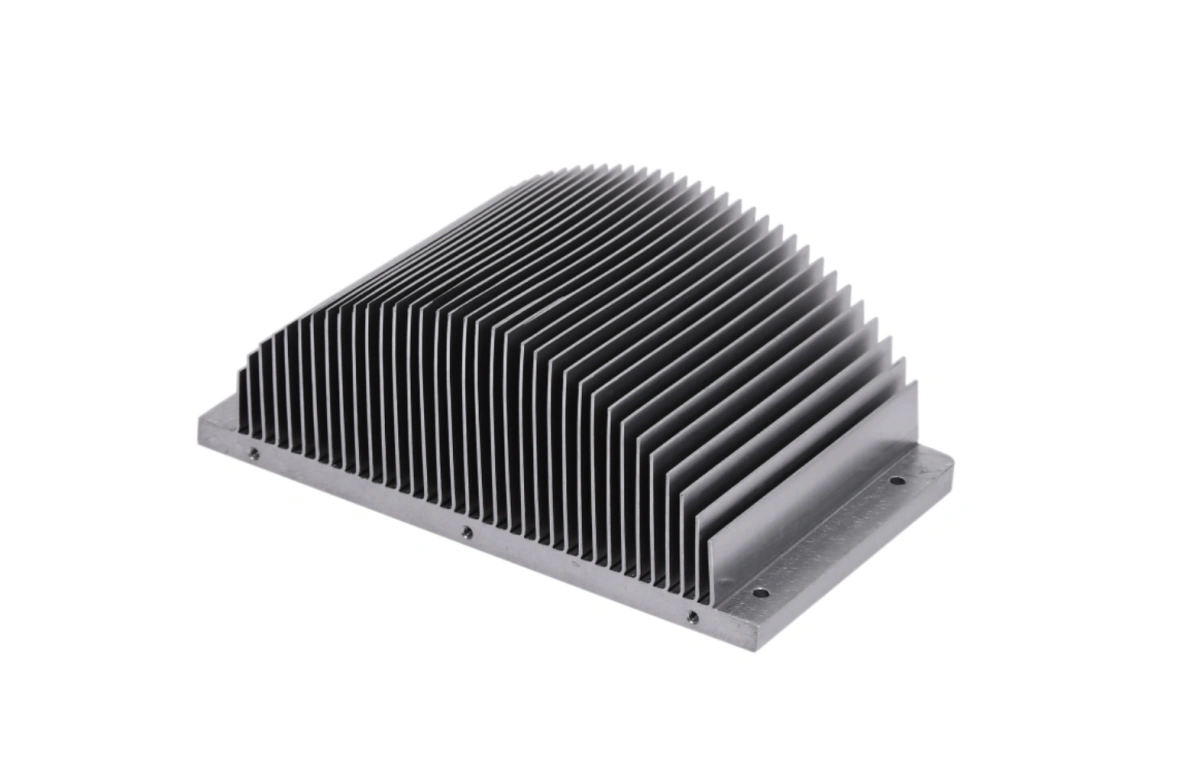
In the modern industrial era, thermal management has become the “silent engine” driving technological progress. As electronic components become smaller and power densities increase, the demand for efficient heat dissipation solutions has skyrocketed. At the heart of this revolution is the Aluminum Heat Sink.
Aluminum profile heat sinks are widely recognized for their superior thermal performance, lightweight nature, and cost-effectiveness. This article provides an in-depth analysis of why aluminum is the preferred material for heat dissipation, the science behind its cooling principles, and how extrusion technology is shaping the future of industries ranging from 5G telecommunications to electric vehicles.
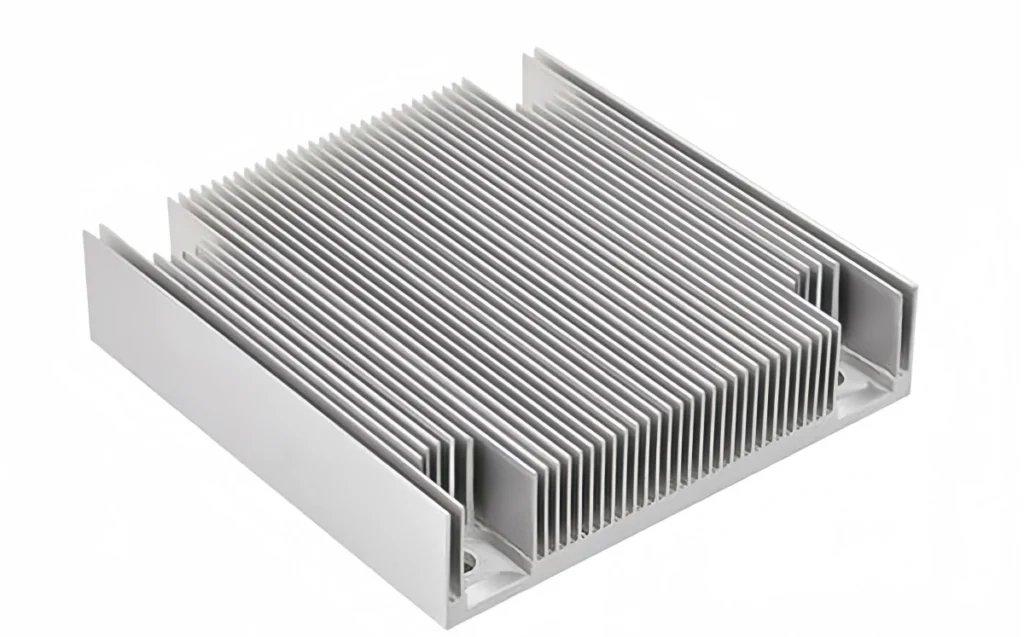
An Aluminum Heat Sink is a thermal management component manufactured primarily through the extrusion process. These components are designed to absorb and dissipate heat generated by mechanical or electronic devices, preventing overheating and ensuring long-term operational stability.
The market dominance of aluminum profiles is not accidental. Through advanced extrusion techniques, manufacturers can produce heat sinks with incredibly thin fins (radiator wings) and massive surface areas. This maximizes the interface between the heat source and the cooling medium (usually air), facilitating rapid heat transfer through natural or forced convection.
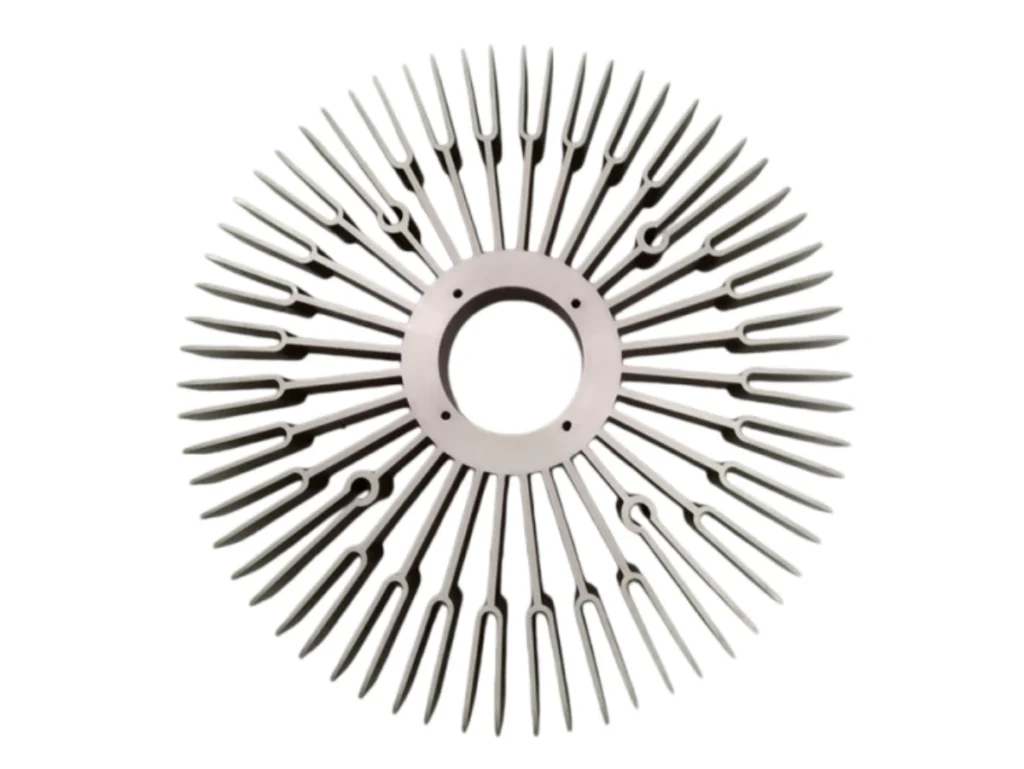
Aluminum heat sinks are available in various shapes tailored to specific airflow requirements:
The efficiency of an aluminum heat sink begins with its metallurgical composition. While pure aluminum has excellent thermal conductivity, it is often too soft for complex industrial machining. Therefore, high-purity aluminum alloys—specifically the 6000 series—are the industry standard.
6063 is the most widely used alloy for heat sinks. It contains silicon and magnesium, which provide:
When a heat sink also serves as a structural component (e.g., in automotive chassis or aerospace frames), 6061 is preferred. While its thermal conductivity is slightly lower than 6063, it offers higher tensile strength and better toughness.
| Materiale | Thermal Conductivity (W/m·K) | Density (g/cm³) | Relative Cost |
| Aluminum (6063) | 201 – 218 | 2.7 | Low/Moderate |
| Copper | 398 | 8.9 | Alto |
| Stainless Steel | 14 – 16 | 7.9 | Moderato |
| Carbon Steel | 45 – 50 | 7.8 | Basso |
Aluminum provides about 50-60% of the conductivity of copper but at one-third of the weight and significantly lower cost, making it the most balanced choice for industrial scale.
The core function of an aluminum heat sink is to increase the effective surface area of a heat source. The cooling process follows three fundamental laws of thermodynamics:
Heat travels from the electronic component (heat source) through the base of the aluminum heat sink. Because aluminum has high thermal conductivity, the heat spreads quickly from the base to the tips of the fins. A thicker base often helps in spreading “heat spots” before the heat reaches the fins.
This is where the shape of the aluminum profile becomes critical. As air passes through the fins, it carries heat away.
While a smaller contributor than convection in most industrial settings, radiation is the emission of energy as electromagnetic waves. Anodizing the aluminum profile (especially black anodizing) increases its emissivity, allowing the heat sink to radiate heat more effectively into the environment.
The widespread adoption of aluminum heat sinks across diverse industries is due to a unique combination of physical and chemical properties:
Aluminum naturally forms a thin, protective oxide layer when exposed to air. In industrial environments, this can be enhanced through anodic oxidation. This treatment prevents corrosion in harsh conditions (water, salt spray, or petrochemical exposure), drastically extending the lifespan of the equipment.
With a density of only 2.7g/cm³, aluminum is ideal for portable electronics, automotive parts, and aerospace components. Despite being light, aluminum profiles can withstand significant pressure, tension, and impact without deforming, ensuring the safety of internal electronic components.
For the electrical and electronics industries, the fact that aluminum is non-magnetic is vital. It does not interfere with magnetic fields in sensitive communication equipment or high-voltage power systems.
Aluminum is non-combustible and does not produce sparks upon impact. This makes it a critical material for heat sinks used in “Ex” (Explosive) environments, such as oil refineries or chemical processing plants.
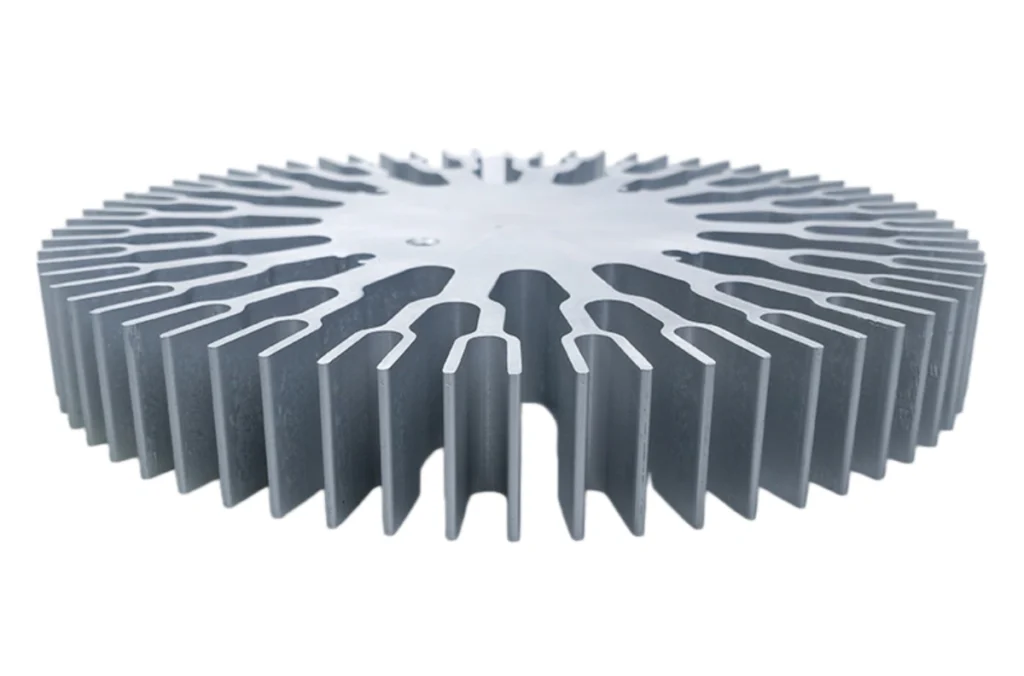
Aluminum is highly ductile. It can be extruded into intricate “sunflower” or “comb” shapes that maximize surface area while maintaining a compact footprint. It is also easy to drill, tap, and CNC machine for custom mounting requirements.
Aluminum is 100% recyclable without losing its original properties. Recycled aluminum requires only 5% of the energy needed to produce primary aluminum, making aluminum heat sinks an environmentally responsible choice for “Green Manufacturing.”
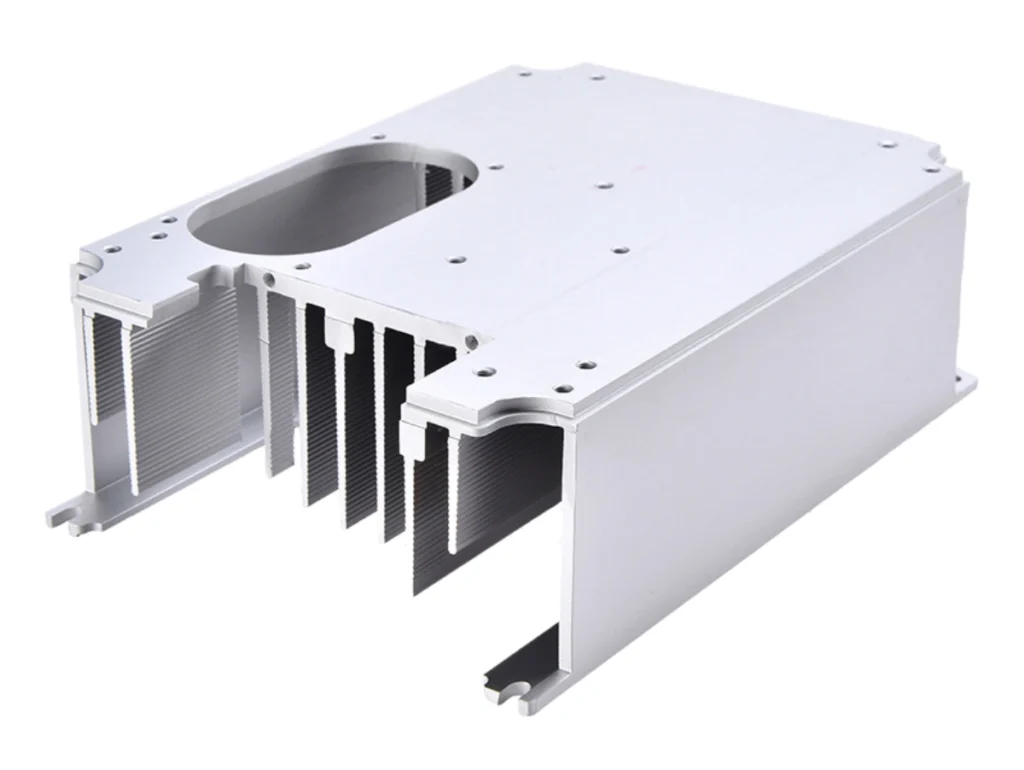
The versatility of the aluminum heat sink allows it to serve almost every modern industrial sector:
5G base stations process vast amounts of data, generating significant heat in compact outdoor enclosures. Aluminum extruded heat sinks with high fin density are used to maintain the temperature of Signal Processing Units (SPUs) and Power Amplifiers.
In electric vehicles, the battery management system (BMS) and the motor controller generate massive heat. Aluminum heat sinks and liquid-cooled aluminum plates are used to ensure the batteries operate within a safe temperature range, preventing thermal runaway and extending battery life.
Wind power and solar energy systems rely on high-power inverters to convert DC to AC. These inverters utilize large-scale aluminum profiles to dissipate heat from IGBT modules, ensuring the stability of the power grid.
High-power LED stadium lights and streetlights are highly sensitive to heat. If the junction temperature rises too high, the light’s lifespan and brightness decrease. Aluminum “sunflower” heat sinks are the industry standard for keeping LEDs cool.
In high-speed trains, the traction system generates intense heat. Lightweight aluminum heat sinks are used to reduce the overall weight of the train while providing the cooling capacity needed for high-speed operation.
Understanding how an aluminum heat sink is made helps in choosing the right supplier. The process generally involves:
For professionals searching for “Aluminum Heat Sink,” this long-form content addresses several search intents:
By using LSI (Latent Semantic Indexing) keywords such as thermal management, extrusion technology, anodic oxidation, and convection cooling, this article signals to search engines that it is a comprehensive authority on the subject.
As we move toward 2030, the technology surrounding the aluminum heat sink continues to evolve:
The aluminum heat sink is far more than a simple piece of metal; it is a precision-engineered solution to one of the most significant challenges in modern technology: heat. From its high-purity 6063 alloy base to its intricately extruded fins, every aspect of an aluminum heat sink is designed for maximum efficiency, durability, and sustainability.
As industries like 5G, New Energy Vehicles, and Aerospace continue to push the limits of power and performance, the role of high-quality aluminum profiles will only become more vital. By choosing the right alloy, shape, and surface treatment, engineers can ensure that their devices stay cool, safe, and operational for decades to come.