Indirizzo
304 Nord Cardinale
St. Dorchester Center, MA 02124
Orario di lavoro
Da lunedì a venerdì: dalle 7.00 alle 19.00
Fine settimana: 10.00 - 17.00
Indirizzo
304 Nord Cardinale
St. Dorchester Center, MA 02124
Orario di lavoro
Da lunedì a venerdì: dalle 7.00 alle 19.00
Fine settimana: 10.00 - 17.00
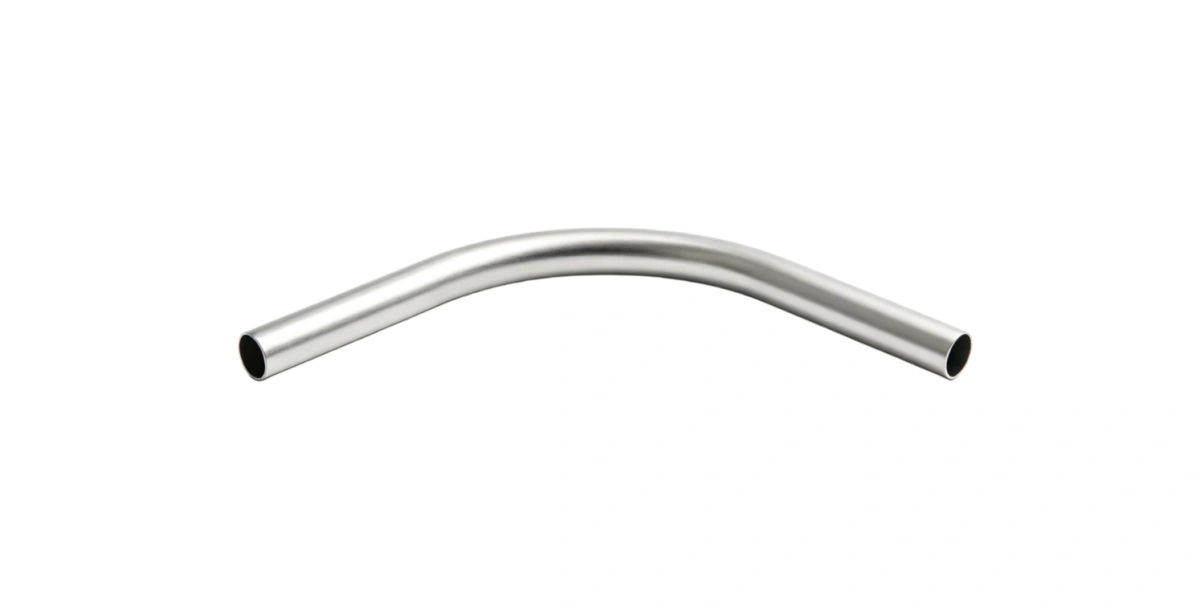
Aluminum tube stretch bending is a high-precision plastic forming process widely used in architectural decoration, automotive manufacturing, aerospace, new energy equipment and industrial pipeline systems. With the booming demand for lightweight metal structures and customized curved components, traditional simple tube bending can no longer meet high-standard requirements for smooth arc, uniform wall thickness and zero surface deformation. This advanced forming technology effectively solves common defects such as tube collapse, wrinkling, cracking and rebound, becoming the mainstream processing method for high-precision curved aluminum tubes. This article systematically explains the working principle, standard process, core technical difficulties and optimized solutions of aluminum tube stretch bending, providing professional and practical reference for processing factories, engineering procurement personnel and technical designers engaged in aluminum tube stretch bending processing.
Different from ordinary pure bending and manual tube bending, aluminum tube stretch bending is a high-precision composite forming technology that combines axial tension and bending moment, which is the core advantage of professional aluminum tube stretch bending manufacturing. The core principle is to apply continuous and stable axial stretching force while bending the aluminum tube, so that the internal stress distribution of the tube wall is completely improved during plastic deformation. In the conventional bending process, the outer wall of the tube is stretched while the inner wall is compressed, resulting in unstable deformation. This professional forming method changes the stress state, keeping the overall tube wall in a reasonable tensile range to avoid compression wrinkling and structural collapse.
The complete stretch bending process includes pre-stretching, rotary bending and supplementary tension shaping. First, the clamping mechanism fixes both ends of the aluminum tube and applies pre-tension to make the material reach a stable yield state. Then, the tube is closely attached to the mold surface through rotary bending. Finally, precise supplementary tension is implemented to offset material rebound and realize high-precision arc forming. This process is suitable for round aluminum tubes, square aluminum tubes, rectangular tubes and special-shaped aluminum profiles, supporting large-radius curved surfaces, multi-segment arcs and complex spatial bending structures.
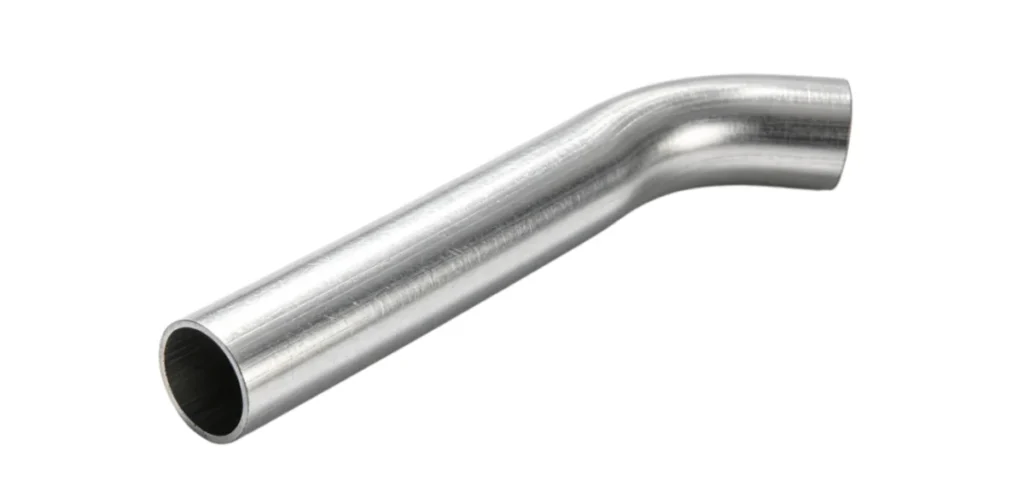
High-precision aluminum tube stretch bending relies on strict standardized process control, and every processing link directly determines the final product yield and overall forming accuracy of aluminum tube stretch bending finished products. The whole process is divided into material inspection, mold matching, pre-stretching forming, bending operation, correction and post-processing.
Material selection and inspection is the primary guarantee. Aluminum tubes for stretch bending are mostly 6063 and 6061 aluminum alloys with good ductility and stable mechanical properties. Hard alloy materials with poor toughness are prone to cracking during stretching. Before processing, workers need to detect tube wall thickness, surface flatness and material hardness to eliminate defective raw materials with uneven texture and internal impurities.
Mold calibration and internal support configuration are key pre-processing steps. According to the bending radius and tube diameter, professional bending dies, pressure dies and anti-wrinkle dies are matched. For thin-walled aluminum tubes, flexible mandrels or filling supports are installed inside the tube. The internal support can effectively prop up the tube wall during bending, prevent inner wall wrinkling and outer wall collapse, and ensure uniform tube section deformation.
Precision stretching and bending forming is the core procedure. The equipment accurately controls the stretching speed, bending angle and arc radian. Through synchronous tension and bending, the aluminum tube is gradually attached to the mold without gaps. After forming, micro-tension correction is carried out to eliminate internal residual stress and reduce rebound deformation. Finally, trimming, deburring and surface protection treatment are completed to finish the production.
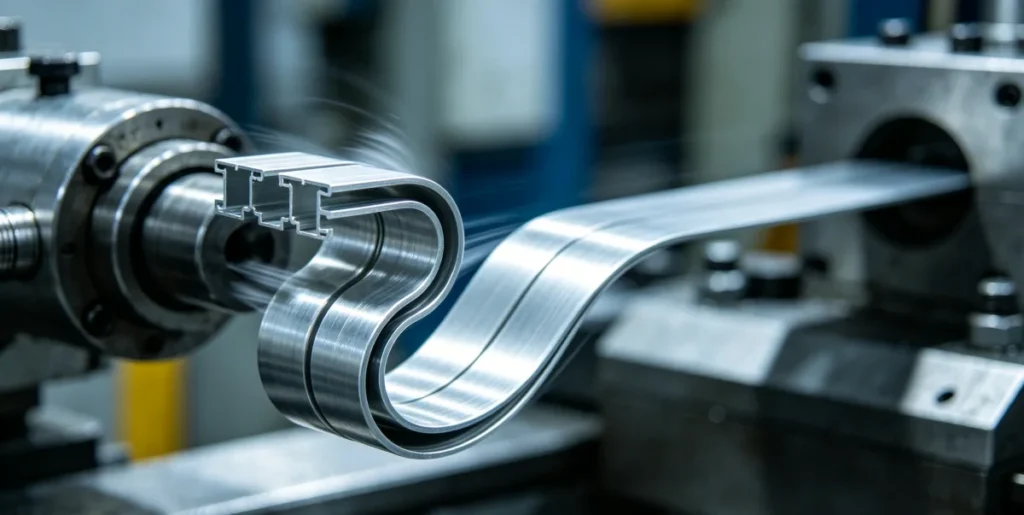
Although aluminum tube stretch bending is a mature metal forming process in the industry, aluminum materials have low hardness, good ductility and sensitive stress characteristics, making precise aluminum tube stretch bending operation extremely challenging. In actual production, precision control faces many technical pain points, which are also the main reasons for defective products in processing plants.
Section collapse is the most common defect in aluminum tube bending. Aluminum tubes have hollow structures with low rigidity. During the bending process, the outer wall is subjected to tensile stress and becomes thinner, while the inner wall is squeezed and stacked. If the internal support is not in place or the tension parameter is unstable, the tube section will change from a standard circle or square to an oval shape, resulting in serious collapse and depression. Thin-walled aluminum tubes below 2mm are particularly prone to this problem, which directly affects assembly accuracy and structural aesthetics.
Wrinkling and cracking are typical failure problems caused by unreasonable stress control. When the axial tension is insufficient and the bending extrusion force is too large, the inner aluminum tube wall will produce stacked wrinkles, forming irregular wave textures. On the contrary, if the stretching force is too large or the bending radius is too small, the tensile stress of the outer wall will exceed the material yield limit, resulting in micro-cracks or direct fracture at the bending position. Aluminum materials have low fatigue resistance, and once cracked, the whole tube will be scrapped and cannot be repaired.
Aluminum tube rebound is an inherent technical difficulty in stretch bending. After the external force is removed, the elastic stress of the aluminum material will recover, causing the bending angle and radian to deviate from the standard value. The rebound degree is affected by material hardness, tube wall thickness, bending radius and stretching parameters. Thick-walled tubes and high-hardness aluminum alloys have more obvious rebound. Uncontrolled rebound will lead to inconsistent arc size of finished products, unable to meet the matching requirements of engineering installation.
The surface of aluminum tubes is soft and easy to be scratched. During the stretch bending process, friction between the tube wall and the mold, as well as improper clamping pressure, will cause surface indentation, scratches and abrasions. For decorative aluminum tubes used in curtain walls and ceilings, minor surface defects will affect the overall appearance quality. In addition, local high-temperature friction during processing will destroy the original oxide film, resulting in uneven surface oxidation and affecting subsequent anodizing and spraying effects.
Ultra-small bending radius and multi-angle complex spatial bending are the key technical challenges of stretch bending. Excessively small bending radii will sharply increase the stress difference between the inner and outer walls of the aluminum tube, making it extremely easy to crack and collapse. For multi-segment variable-radius arcs and three-dimensional bent tubes, the tension and bending speed need dynamic adjustment in real time. Ordinary fixed-parameter equipment cannot achieve synchronous forming, resulting in low product qualification rate.
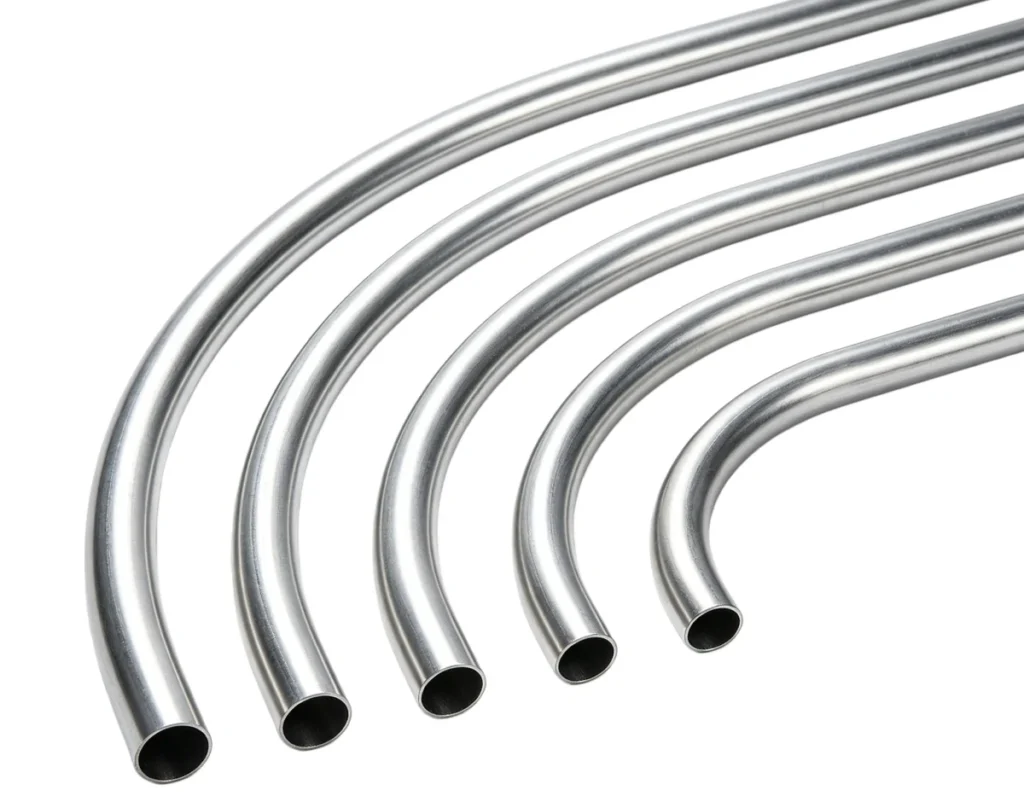
Aiming at the above technical difficulties existing in aluminum tube stretch bending, professional aluminum tube processing factories adopt targeted optimization schemes from mold configuration, parameter control, auxiliary technology and material matching to effectively improve the forming accuracy and product yield of aluminum tube stretch bending.
First, configure professional internal support and anti-wrinkle molds. Install high-precision flexible mandrels inside the aluminum tube to support the tube wall in real time during bending, effectively solving collapse and oval deformation. Match anti-wrinkle dies at the bending tangent point to eliminate inner wall stacking and wrinkling problems.
Second, optimize stretching and bending parameter matching. According to the tube diameter, wall thickness and aluminum alloy model, set scientific pre-stretching force, bending speed and supplementary tension. Adopt low-speed and stable forming for thin-walled tubes to avoid instantaneous stress concentration. Appropriately increase tension for thick-walled tubes to offset rebound stress and ensure accurate arc fitting.
Third, adopt surface protection and lubrication technology. Apply professional high-temperature lubricating oil on the mold surface and tube wall to reduce friction damage. Use soft clamping fixtures to avoid pressure indentation. Protect the oxide film layer during processing to ensure the surface flatness of finished products.
Fourth, carry out stress correction and secondary shaping. After bending forming, perform heat treatment or micro-tension correction to eliminate internal residual stress, stabilize the forming size, and greatly reduce the rebound rate. For complex arc products, use CNC intelligent stretch bending equipment to realize full-process parameter programming control and improve the consistency of batch products.
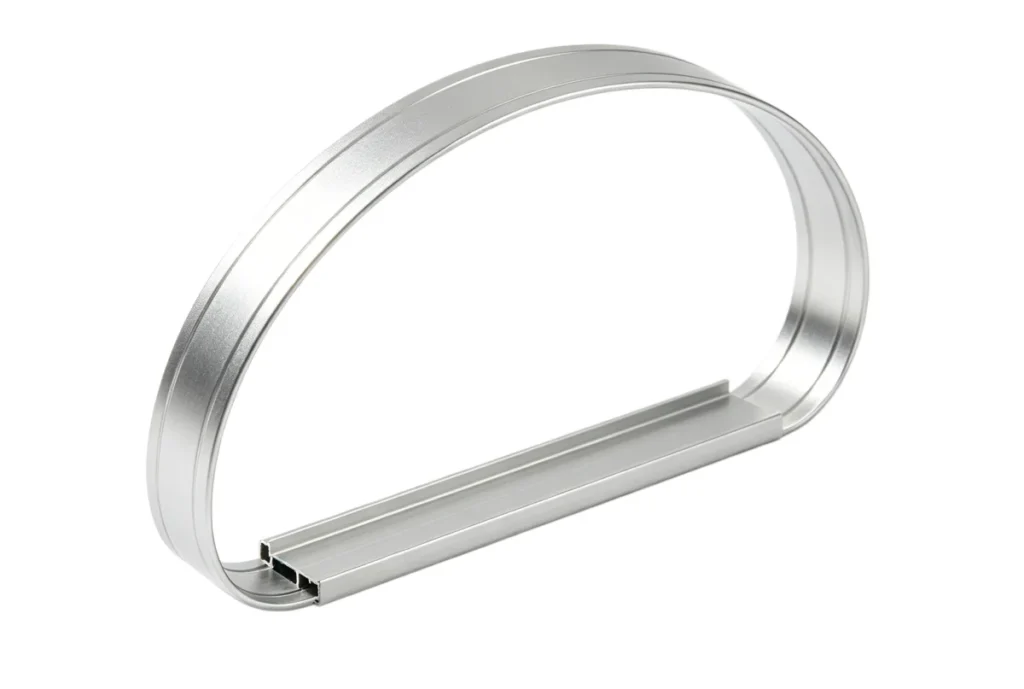
After professional optimized aluminum tube stretch bending processing, aluminum tubes feature uniform wall thickness, smooth arcs, no deformation and no cracks, meeting high-standard industrial and architectural usage requirements. They are widely used in high-precision fields that require both structural performance and appearance effect. In architectural decoration, curved aluminum tubes are used for curtain wall modeling, ceiling arc lines, corridor handrails and landscape modeling. In the automotive industry, they are applied for automobile body structural parts, roll cage frames and interior decorative bent pipes. In new energy and industrial fields, they serve for equipment heat dissipation frames, pipeline brackets and mechanical arc guide structures. In aerospace and high-end equipment manufacturing, high-precision bent aluminum tubes rely on their lightweight and high-strength advantages to replace traditional metal parts.
Aluminum tube stretch bending is a sophisticated metal plastic forming technology that solves the industry pain points of easy collapse, wrinkling, cracking and large rebound in traditional tube bending. Its core processing difficulties focus on stress balance control, anti-deformation forming, rebound correction and surface protection. With the upgrading of CNC intelligent processing equipment and continuous optimization of mold technology, the precision and yield of aluminum tube curved processing have been greatly improved. At present, this mature aluminum tube stretch bending process has become an indispensable key process in architectural decoration, automotive lightweight and industrial precision manufacturing, providing reliable high-quality curved aluminum tube components for various industries.