Address
304 North Cardinal
St. Dorchester Center, MA 02124
Work Hours
Monday to Friday: 7AM - 7PM
Weekend: 10AM - 5PM
Address
304 North Cardinal
St. Dorchester Center, MA 02124
Work Hours
Monday to Friday: 7AM - 7PM
Weekend: 10AM - 5PM
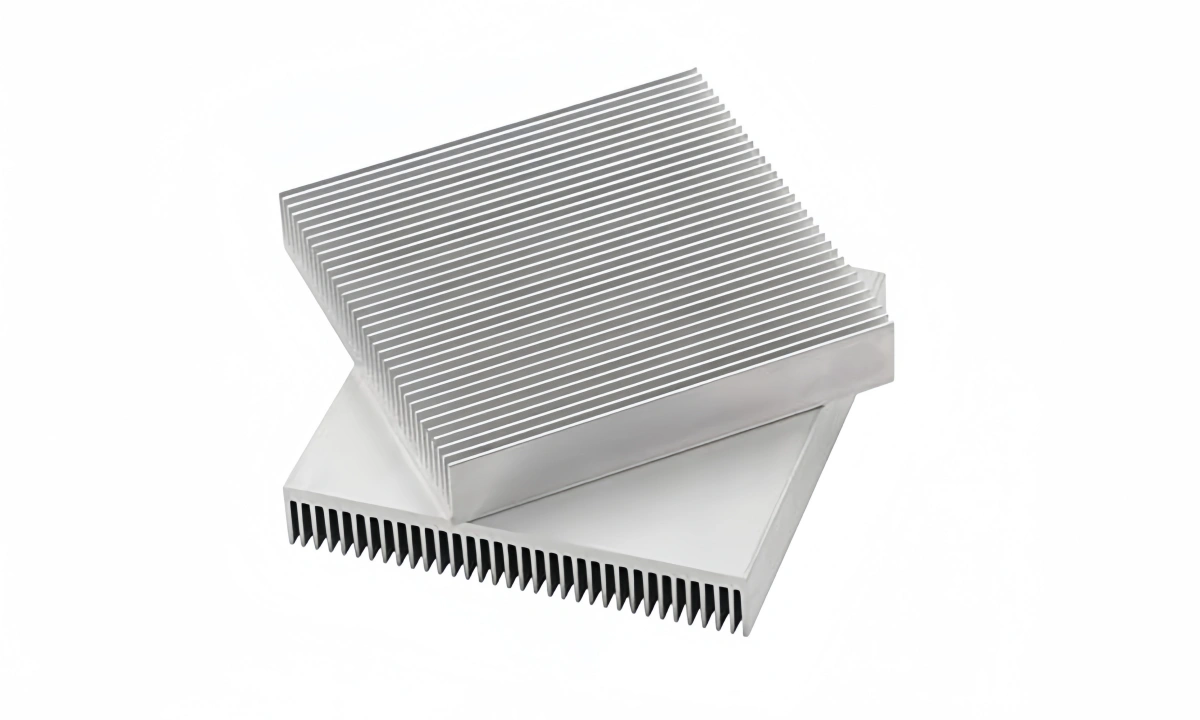
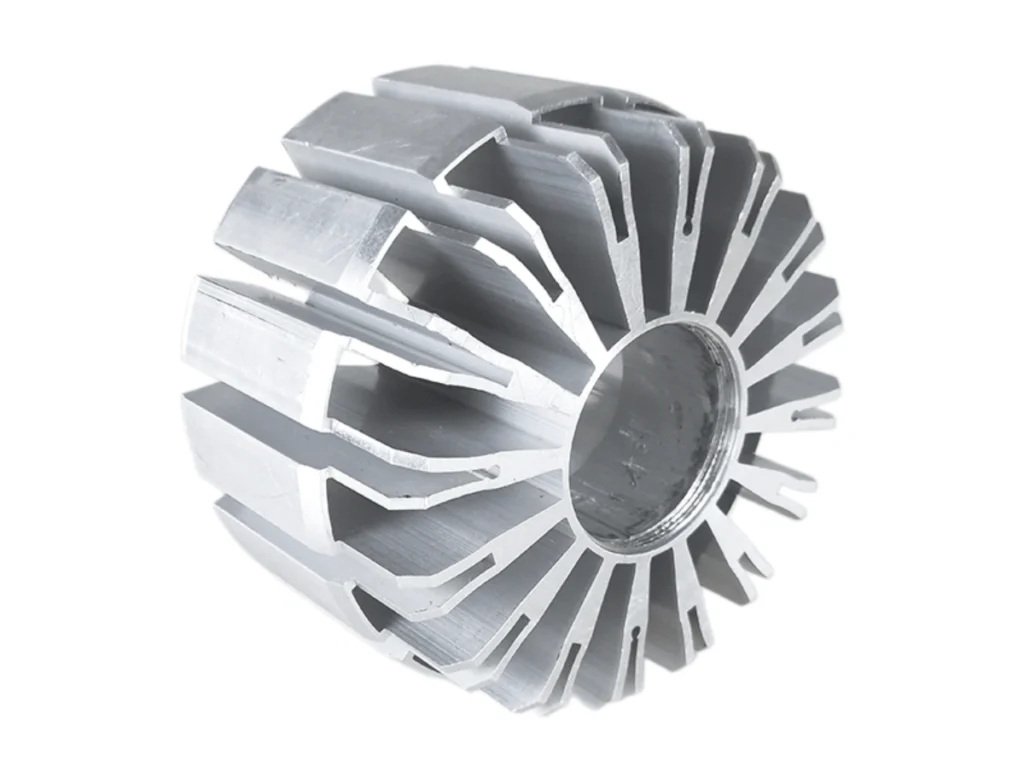
In the rapidly evolving landscape of electronics, thermal management has become a critical bottleneck for performance and reliability. From high-power LEDs and telecommunications equipment to electric vehicle (EV) batteries and data center servers, the aluminum profile heatsink remains the industry standard for heat dissipation.
Choosing the right aluminum alloy is not merely a matter of cost; it is a complex engineering decision that balances thermal conductivity, structural integrity, manufacturability, and environmental resistance. This guide provides an in-depth analysis of the 8 most common aluminum grades used in heatsink production, helping engineers and procurement specialists make data-driven decisions.
Aluminum alloys are categorized into “Series” based on their primary alloying elements. Each series offers distinct advantages for thermal applications:
The selection process should follow a hierarchical logic:
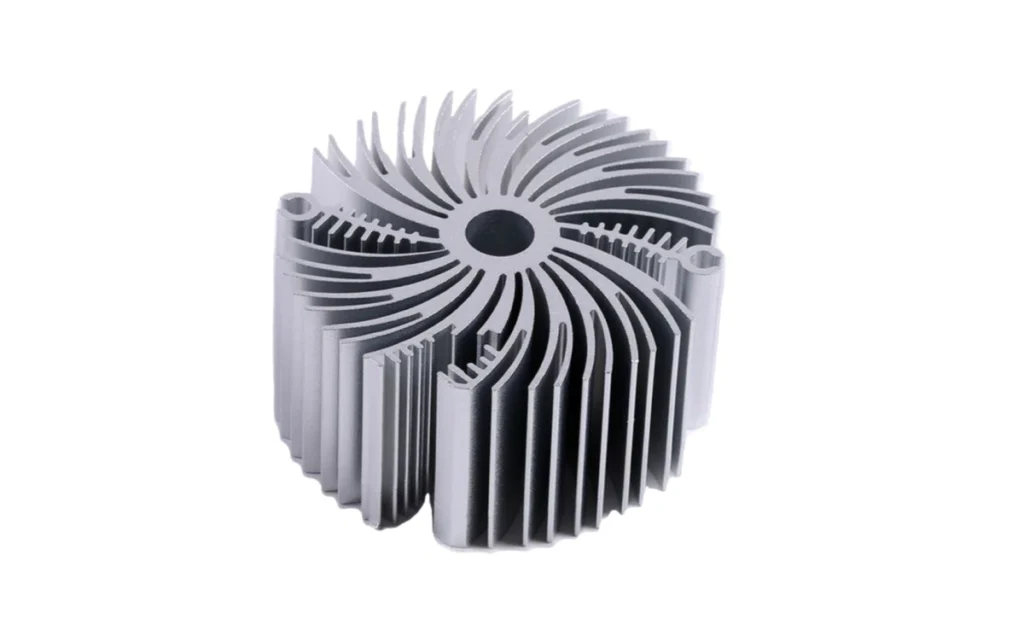
We focus on eight specific grades: 1050, 1060, 3003, 3004, 5052, 5083, 6061, and 6063. These cover over 95% of all aluminum heatsink applications.
| Alloy | Series | Main Elements | Thermal Conductivity (W/m·K) @ 20°C | Density (g/cm³) | Common Temper | Positioning |
| 1050 | 1xxx | Al ≥ 99.5% | 220 | 2.70 | O, H14 | Low-end, focus on conductivity & cost |
| 1060 | 1xxx | Al ≥ 99.6% | 230 | 2.70 | O, H14, H18 | Mid-low end, superior to 1050 |
| 3003 | 3xxx | Mn: 1.0-1.5% | 180 | 2.73 | O, H14, H18 | Mid-range, corrosion resistant |
| 3004 | 3xxx | Mn: 1.0-1.5%, Mg: 0.8-1.3% | 170 | 2.73 | O, H14, H34 | Mid-range, stronger than 3003 |
| 5052 | 5xxx | Mg: 2.2-2.8% | 140 | 2.68 | O, H14, H32 | Mid-high end, anti-corrosive, stamping |
| 5083 | 5xxx | Mg: 4.0-4.9% | 120 | 2.66 | O, H112, H321 | High-end, high strength, thick plates |
| 6061 | 6xxx | Mg: 0.8-1.2%, Si: 0.4-0.8% | 160 | 2.70 | O, T4, T6 | Structural parts, high strength |
| 6063 | 6xxx | Mg: 0.45-0.9%, Si: 0.2-0.6% | 180 | 2.70 | O, T5, T6 | Primary heatsink profile grade, extrudable |
While the 1xxx series offers the best thermal performance, the 6xxx series (specifically 6063) is the most popular for aluminum profile heatsinks because it balances conductivity with the ability to be extruded into complex fin shapes.
Structural integrity is vital for heatsinks in mobile devices (bending resistance), automotive parts (vibration), and liquid cold plates (pressure resistance).
| Alloy | Temper | Tensile Strength (MPa) | Yield Strength (MPa) | Elongation (%) | Hardness (HV) | Characteristics |
| 1050 | O | ≥ 75 | ≥ 30 | ≥ 30 | 25-30 | Extremely soft, high plasticity |
| 1060 | H18 | ≥ 150 | ≥ 130 | ≥ 5 | 45-50 | Work-hardened, low plasticity |
| 3003 | O | ≥ 110 | ≥ 40 | ≥ 25 | 35-40 | Good balance of strength/ductility |
| 5052 | H32 | ≥ 260 | ≥ 210 | ≥ 10 | 80-85 | High fatigue strength, anti-deformation |
| 5083 | H321 | ≥ 310 | ≥ 250 | ≥ 8 | 90-95 | Ultra-high strength for heavy-duty use |
| 6061 | T6 | ≥ 270 | ≥ 240 | ≥ 8 | 95-100 | Heat-treated, excellent load-bearing |
| 6063 | T6 | ≥ 210 | ≥ 180 | ≥ 10 | 85-90 | Moderate strength, best for extrusion |
Strength Hierarchy: 5083 (H321) > 6061 (T6) > 5052 (H32) > 3004 (H34) > 6063 (T6) > 1060 (H18).
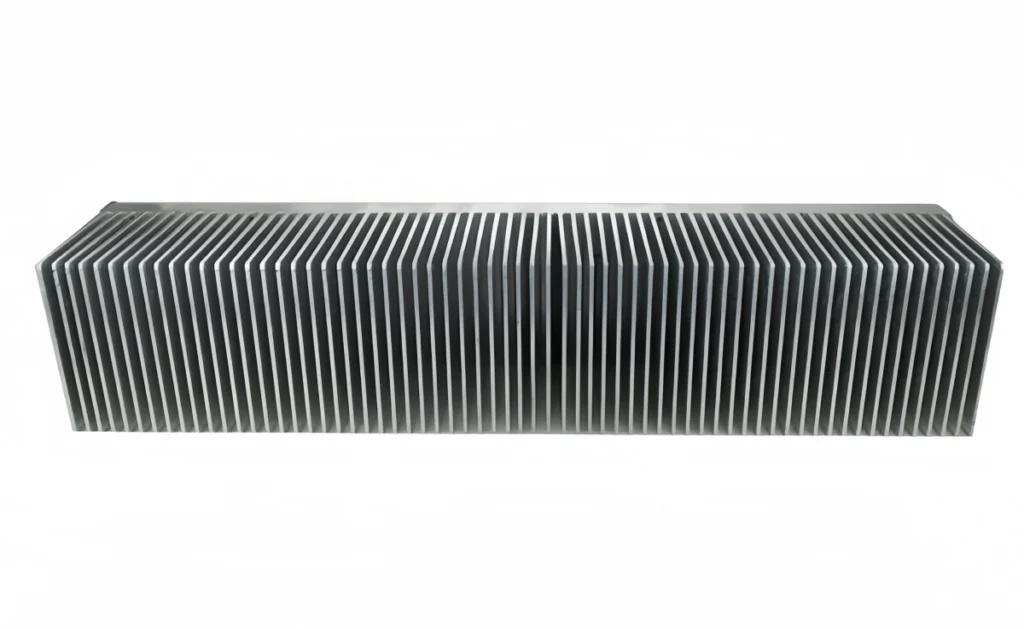
CNC milling is essential for liquid cooling channels and precision fin surfaces.
Stamping is used for thin fins (skived or folded) and light casings.
Most high-performance liquid cold plates require joining two or more aluminum components.
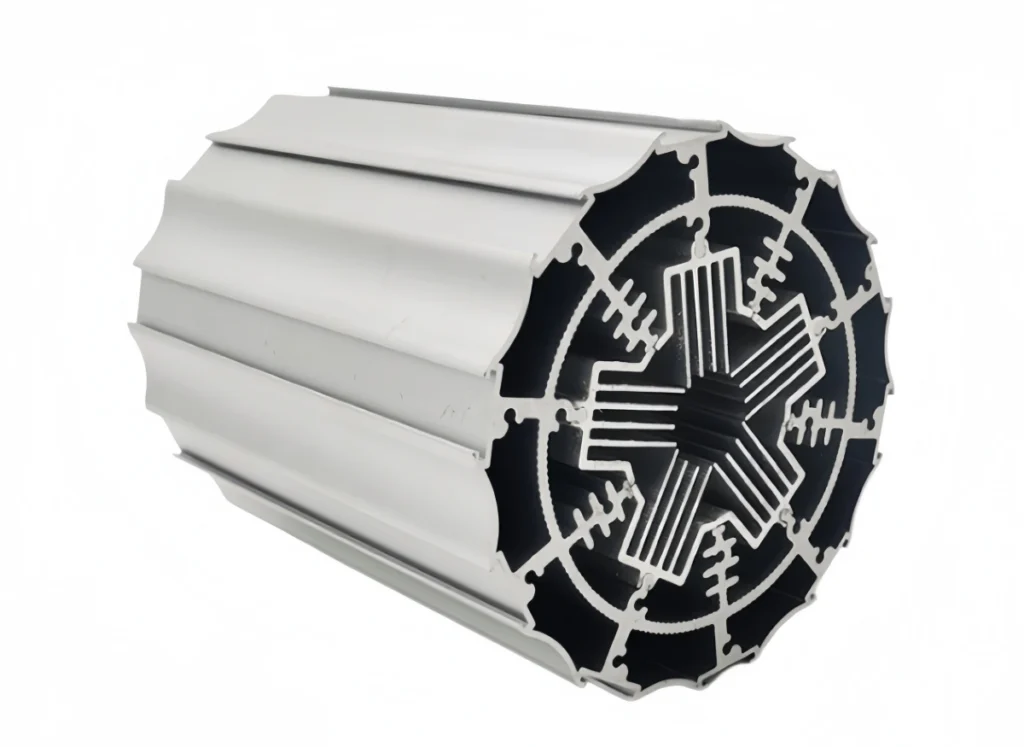
Liquid cooling is the frontier of thermal management. The choice between 3003 and 6061 determines the entire production line.
| Feature | 3003 Liquid Cold Plate | 6061 Liquid Cold Plate |
| Primary Joining Method | Brazing (Vacuum or Controlled Atmosphere) | Friction Stir Welding (FSW) |
| Thickness Suitability | Thin plates (0.5mm – 3.0mm) | Mid-to-thick plates (>3.0mm) |
| Advantages | Excellent flowability of filler; highly complex multi-layer internal channels possible. | Massive structural strength; no filler metal used; zero risk of “brazing flux” contamination. |
| Disadvantages | Lower strength; can deform under high internal pressure. | High equipment cost; difficult to weld complex 3D internal geometries. |
| Typical Use Case | EV Battery Cooling Plates, Small Heat Exchangers. | High-power IGBT Cooling, Server Cold Plates. |
An aluminum profile heatsink is rarely used in its raw “mill finish” state. Surface treatments serve two purposes: protection and thermal radiation enhancement.
When designing or sourcing an aluminum profile heatsink, ask these four questions:
The aluminum profile heatsink is a masterpiece of material science. While 6063 remains the “all-rounder” for most extrusion needs, the rise of liquid cooling and high-density electronics has brought alloys like 3003 and 6061 to the forefront. By understanding the mechanical and thermal trade-offs of these eight grades, you can optimize your product for peak performance, long-term reliability, and cost-efficiency.