Adresse
304 Nord Kardinal
St. Dorchester Center, MA 02124
Arbeitszeiten
Montag bis Freitag: 7AM - 7PM
Am Wochenende: 10AM - 5PM
Adresse
304 Nord Kardinal
St. Dorchester Center, MA 02124
Arbeitszeiten
Montag bis Freitag: 7AM - 7PM
Am Wochenende: 10AM - 5PM
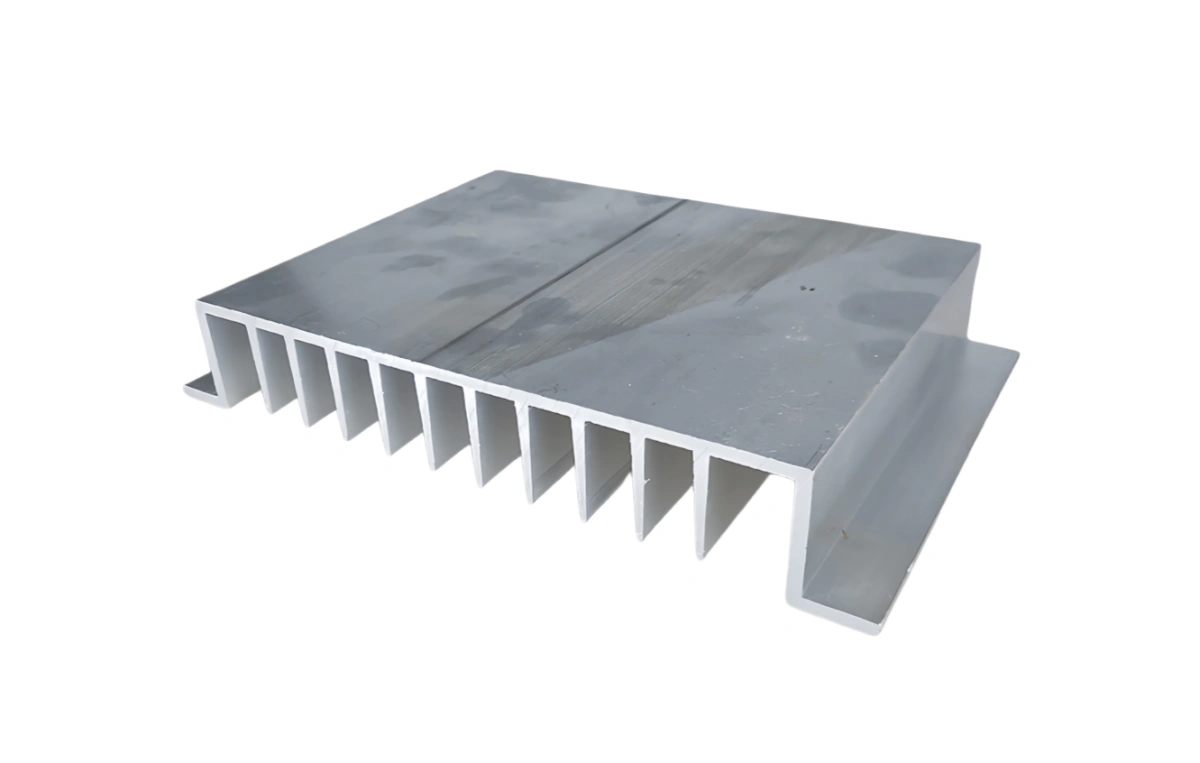
Modern electronic devices, industrial control systems and new energy equipment are rapidly advancing toward miniaturization and high power density. This trend brings higher heat generation, making stable and efficient thermal dissipation essential to avoid overheating damage and prolong equipment service life. As a mature and standardized thermal management solution, the aluminum extruded heatsink features integrated structure, reliable thermal conductivity and high cost performance. It is widely used in civil, commercial and industrial cooling scenarios. This article explores its basic definition, working principle, extrusion manufacturing process, structural classification, core strengths and practical applications, offering clear technical references for industry practitioners and procurement personnel.
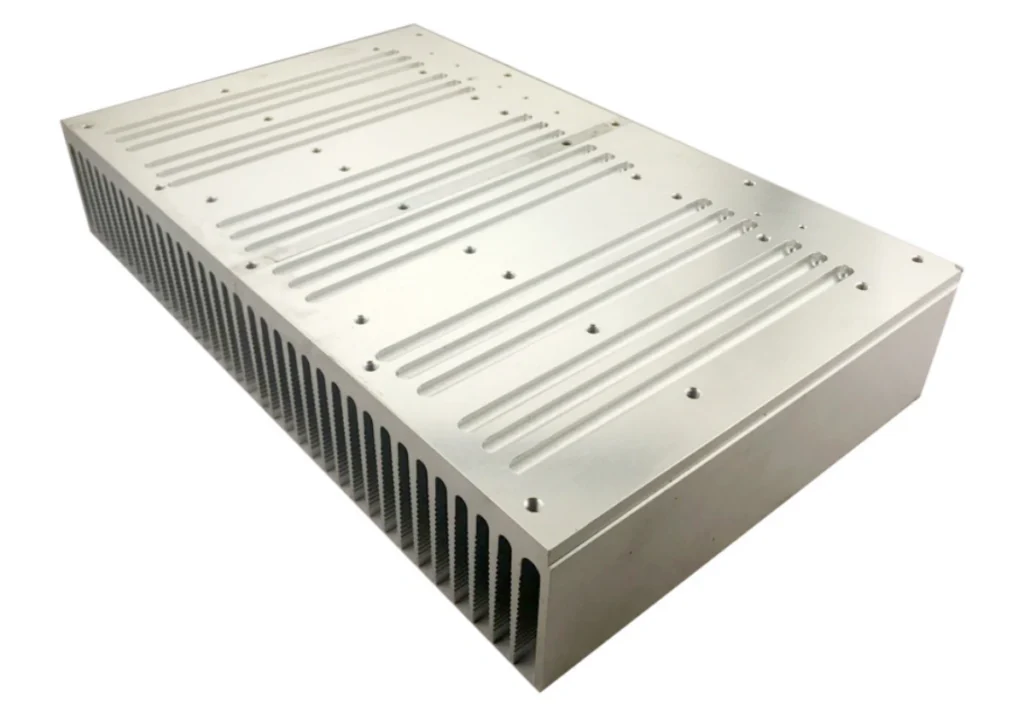
An aluminum extruded heatsink is a standard thermal component produced through one-time hot extrusion of high-quality aluminum alloy. Unlike stamped, inserted or bonded cooling parts, it adopts a seamless integral structure where the base and cooling fins are integrally formed without splicing gaps or assembly interfaces. After extrusion shaping, the product undergoes precision cutting, CNC finishing and professional anodizing treatment to form a complete, high-stability heat dissipation module.
Most cooling products of this type adopt 6063 and 6061 aluminum alloys. These grades balance excellent thermal conductivity and ductility, which suits large-scale extrusion processing and long-term continuous heat dissipation work. Thanks to simple production flow, stable mechanical performance and strong versatility, the aluminum extruded heatsink has become the most mainstream basic cooling component in modern thermal management industries.
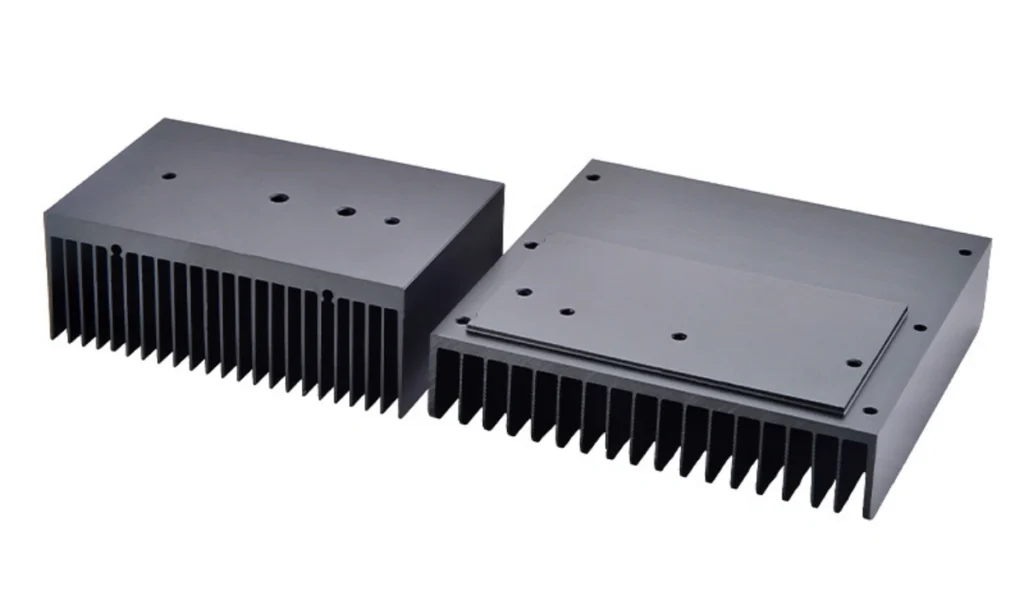
The cooling mechanism of the aluminum extruded heatsink follows three basic physical heat transfer modes: thermal conduction, thermal convection and thermal radiation. Its unique integrated structural design builds a low-resistance and high-efficiency heat exchange system to ensure stable temperature reduction for various devices.
Thermal conduction is the core performance advantage of the aluminum extruded heatsink. The one-piece molding completely eliminates interface thermal resistance. The flat base closely fits heat sources and quickly and evenly transfers heat to every fin on the surface. Without splicing gaps, it avoids heat loss and transfer delay, delivering more stable conduction efficiency than assembled heatsink products.
Thermal convection acts as the main heat dissipation method. Precision extrusion technology creates dense, thin and neatly arranged fin structures, which greatly expand the effective heat exchange area within limited installation space. Ambient air flows through fin gaps and continuously takes away surface heat, realizing fast and natural convection cooling for daily equipment operation.
Thermal radiation provides auxiliary cooling effects. After professional anodizing treatment, the surface roughness and radiation coefficient are effectively improved. The optimized surface can radiate residual heat to the external environment, further improving the overall cooling efficiency of the entire heatsink.
Stable product performance relies on standardized and mature extrusion molding technology. The complete manufacturing process includes aluminum ingot heating, die extrusion, cooling shaping, stretch straightening, fixed-length cutting and precision finishing. Each procedure directly affects the flatness, fin verticality and overall thermal stability of finished cooling parts.
High-temperature ingot heating is the key pre-processing step. Aluminum raw materials are heated to 480–520℃ to reach an ideal plastic state, ensuring sufficient fluidity during extrusion. This effectively prevents common defects such as fin deformation, cracking and uneven thickness. High-precision integral molds are then used to extrude continuous fin profiles in one single operation.
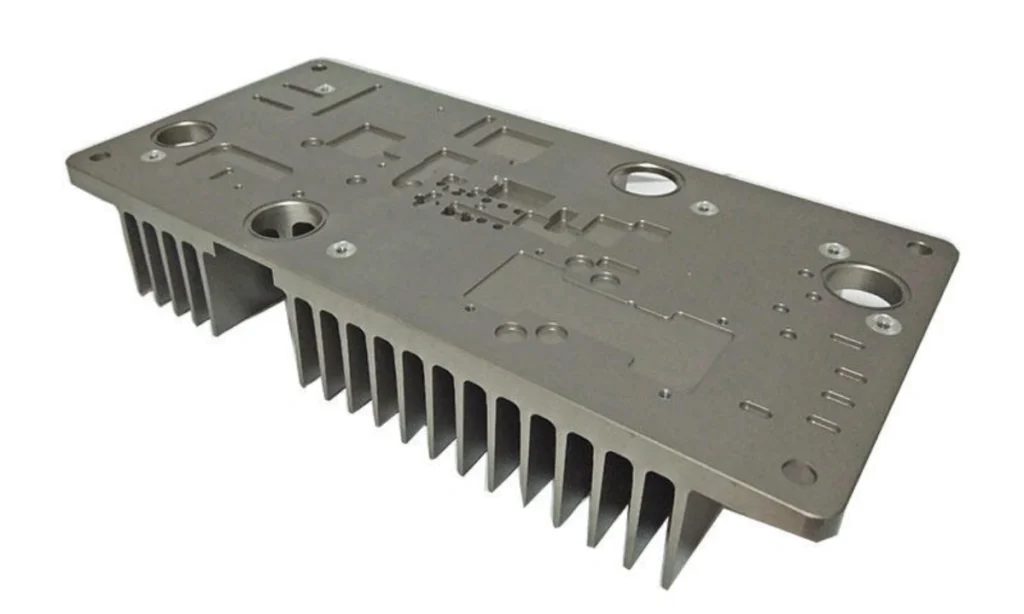
The extruded profile is rapidly shaped through air cooling or water cooling to avoid thermal distortion. Stretch straightening is implemented to eliminate internal residual stress and ensure flat base surface and vertical fins. Finally, customized cutting, deburring, milling and drilling are completed according to actual installation requirements to produce qualified finished products.
Modern precision extrusion technology supports ultra-thin, ultra-dense and high-aspect-ratio fin molding. The upgraded processing method significantly improves unit-area heat dissipation density, fully meeting the high-efficiency cooling demands of medium and high-power industrial equipment.
Aluminum extruded heatsink products support diversified structural designs to adapt to different power levels and working environments. According to fin shapes, they are mainly divided into straight fin, tooth-shaped fin, wave fin and special groove types, with each structure offering targeted cooling characteristics.
Straight fin products are the most common standard type. Vertical and evenly spaced fins ensure smooth air fluidity, making them ideal for natural cooling and conventional forced air cooling scenarios. They are widely applied in power adapters, control cabinets, inverters and various low-power electronic modules.
Tooth-shaped fin and wave fin structures are optimized for higher cooling requirements. Tooth-shaped fins expand single-piece heat exchange area to enhance convection efficiency for medium-power equipment. Wave fin structures increase air turbulence, eliminate static air layers on the surface and further improve heat transfer efficiency for medium to high-power cooling scenarios.
Based on working modes, these heatsinks are divided into natural cooling and forced air cooling types. Natural cooling versions adopt wider fin gaps to reduce dust accumulation and suit long-term static operation. Forced air cooling versions use dense thin fins to maximize heat dissipation area under fan-assisted airflow.
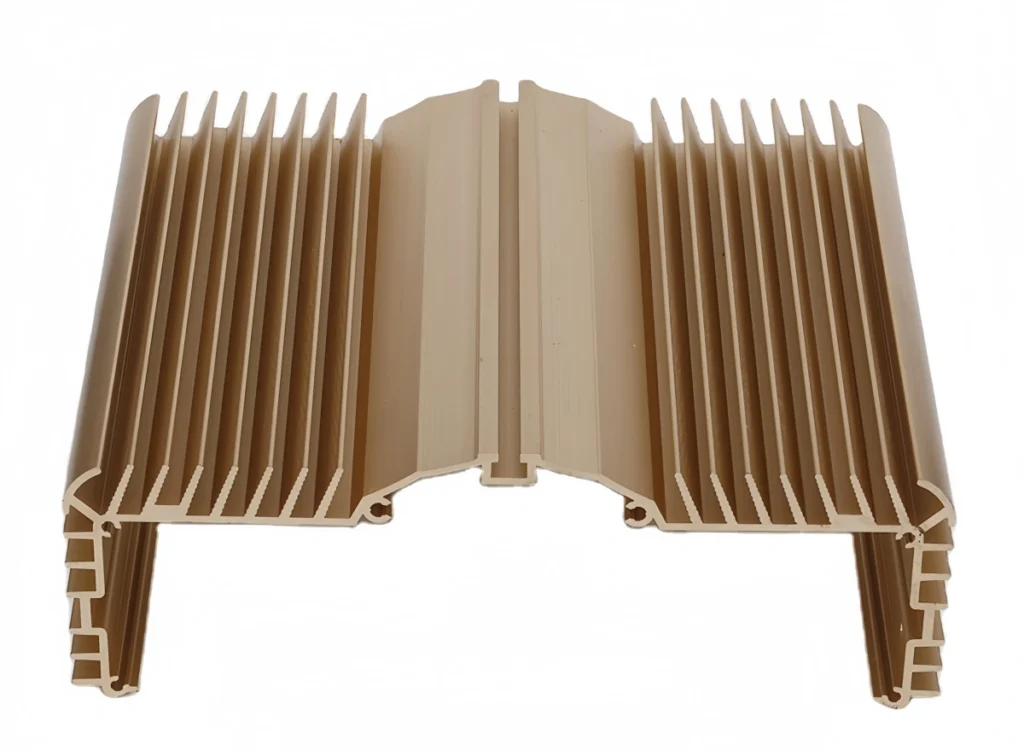
Compared with stamping heatsinks, inserted fin heatsinks and copper cooling parts, aluminum extruded heatsink solutions deliver outstanding comprehensive advantages for industrial and civilian thermal management.
First, it achieves zero thermal resistance heat conduction. The integrated one-piece structure removes assembly and welding gaps completely. Heat transfers stably from the base to the fins without loss, ensuring higher and more consistent thermal efficiency than spliced products.
Second, it features excellent structural stability and long service life. The integral body resists compression, impact and thermal fatigue. It will not loosen or deform during long-term high-temperature operation and mechanical vibration, making it suitable for 24-hour continuous industrial equipment.
Third, it provides superior cost performance for mass production. Standardized extrusion processes enable fast production speed and low unit cost. With stable and consistent product quality, it shows obvious lightweight and cost advantages over copper and high-end forged cooling components.
Fourth, it boasts strong processing plasticity. It supports customized cutting, drilling, tapping and various surface treatments. Manufacturers can flexibly adjust sizes and structures to match diverse installation spaces and cooling requirements.
Fifth, it adapts well to complex environments. Anodizing and electrophoretic coating enhance surface oxidation resistance and weather resistance, ensuring stable operation in high-temperature, humid and outdoor working conditions.
Thanks to stable performance and high versatility, aluminum extruded heatsink products cover most medium and low-power heat dissipation scenarios and serve multiple mainstream industries.
In industrial control fields, they cool PLC cabinets, frequency converters, switching power supplies and industrial transformers to ensure stable automated production. In consumer electronics, they are widely used in power adapters, LED drivers, audio equipment and household electrical control modules.
In the new energy industry, these cooling parts support thermal management for charging modules, energy storage units, photovoltaic inverters and low-power vehicle electronic components. In communication fields, they provide reliable heat dissipation for 5G micro base stations and signal amplification equipment.
In addition, they are commonly applied in medical devices, smart terminals and commercial lighting systems, becoming the most versatile basic cooling component in modern manufacturing.
The industry is evolving toward high precision, high heat density, lightweight design and green processing. As electronic equipment becomes smaller and more powerful, traditional fin structures can no longer meet upgraded cooling demands. Manufacturers continuously optimize extrusion molds to develop ultra-thin dense fin and micro-channel structures for improved thermal performance.
Material optimization focuses on high-purity high-thermal-conductivity aluminum alloys to upgrade heat transfer efficiency. Advanced post-processing technologies such as CNC precision finishing and thermal conductive coating further reduce contact thermal resistance and strengthen overall heat exchange capacity.
Driven by new energy, intelligent manufacturing and 5G communication development, aluminum extruded heatsink technology will continue to iterate and upgrade. It will maintain core competitiveness in medium and low-power thermal management markets relying on its high stability and cost-effectiveness.
The aluminum extruded heatsink is a mature, reliable and cost-effective thermal solution realized by one-time alloy extrusion molding. It integrates zero-resistance heat conduction, stable integral structure and strong versatility, solving mainstream cooling problems for industrial and civil electronic equipment. With standardized craftsmanship and flexible structural design, it adapts to various natural and forced air cooling scenarios. Continuous technological upgrades will enable the aluminum extruded heatsink to steadily support efficient and stable operation of modern electrical and intelligent equipment.