Address
304 North Cardinal
St. Dorchester Center, MA 02124

Work Hours
Monday to Friday: 7AM - 7PM
Weekend: 10AM - 5PM
Contact Form Demo

The Comprehensive Guide to Aluminum Profile Extrusion and Advanced Stretch Bending Technology

In the contemporary landscape of architecture, automotive engineering, and industrial manufacturing, aluminum has emerged as the “metal of the future.” Its transition from a simple raw material to a complex structural component is driven by one primary process: Aluminum Profile Extrusion.

Whether it is the curved glass facade of a futuristic skyscraper or the lightweight frame of an electric vehicle, the precision of the extrusion and the subsequent stretch bending determine the success of the project. This guide explores the technical intricacies of the aluminum forming process, from mold design to advanced surface finishing.


1. Understanding Architectural Aluminum Profiles

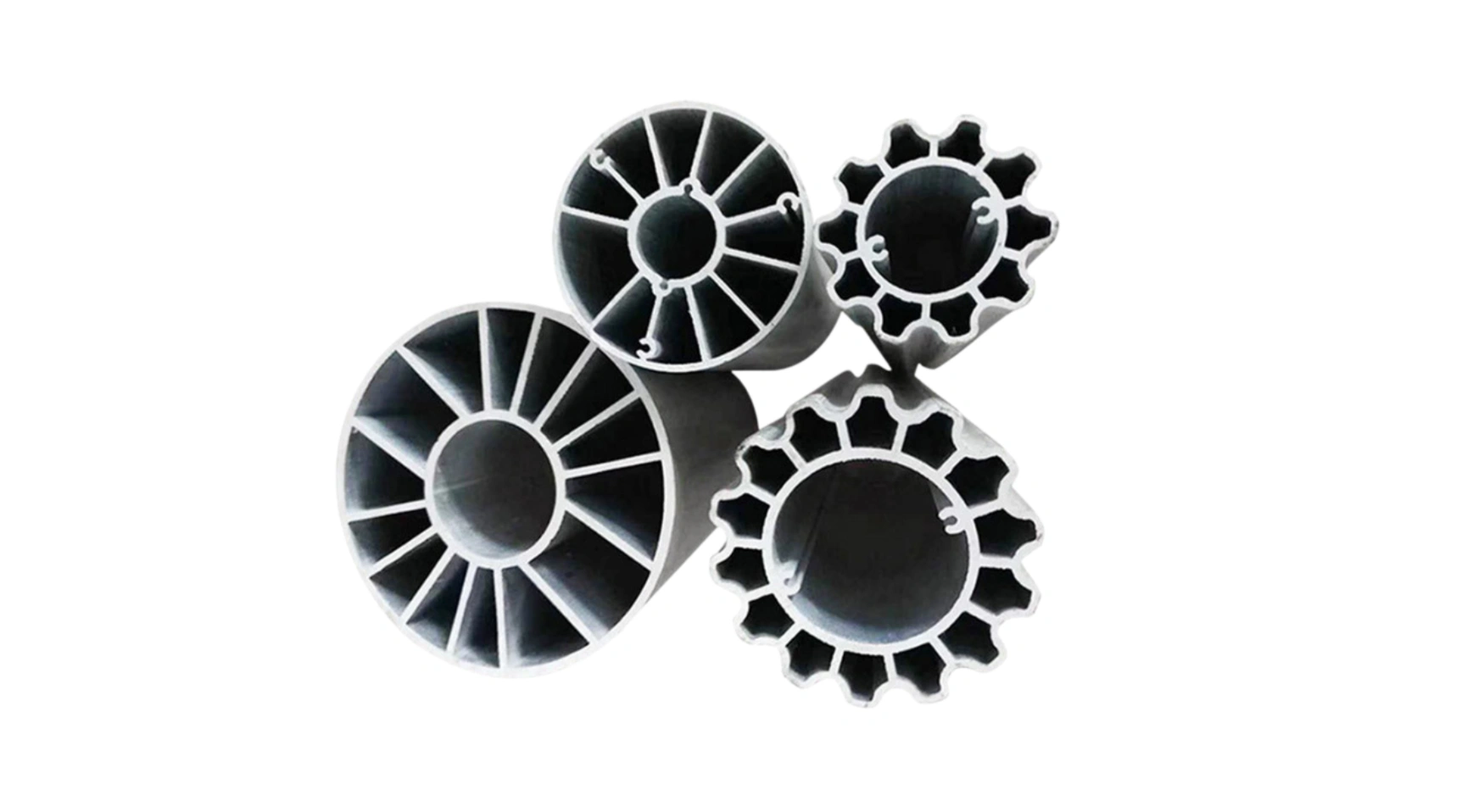
Architectural aluminum profiles are not pure aluminum; they are sophisticated alloys. By integrating small amounts of elements like magnesium and silicon (typically the 6000 series), manufacturers create a material that balances strength with workability.

Key Advantages:

  • High Strength-to-Weight Ratio: Essential for high-rise curtain walls.
  • Exceptional Ductility: Making it the perfect candidate for aluminum profile extrusion.
  • Corrosion Resistance: Naturally forming a protective oxide layer.
  • Aesthetic Flexibility: Capable of adopting various colors and textures through chemical and mechanical treatments.

2. The Heart of the Process: Mold (Die) Engineering

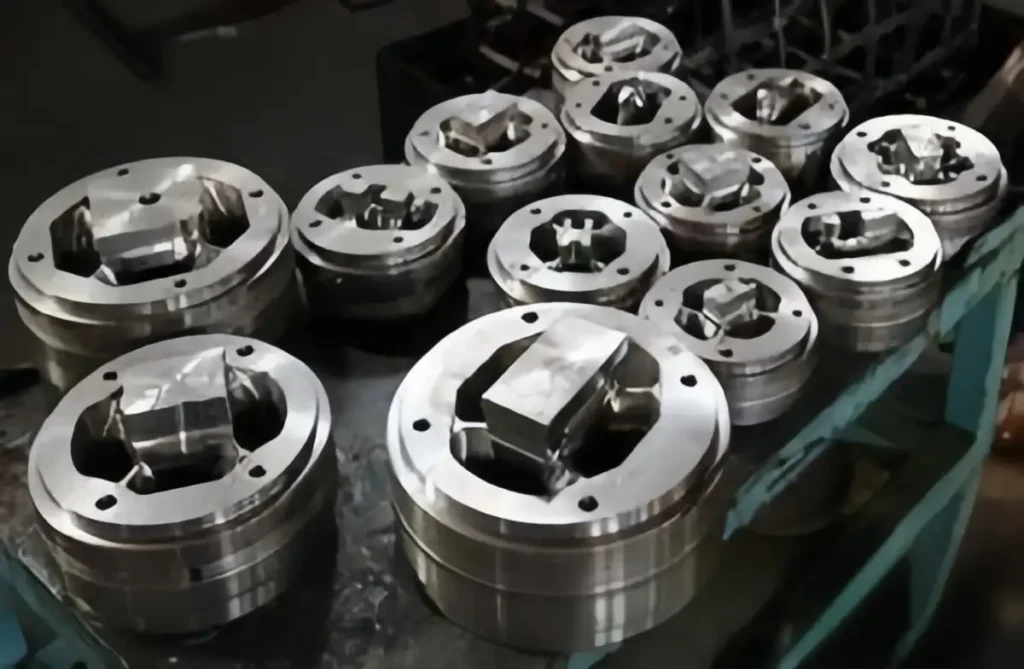
Before a single billet is heated, the success of the aluminum profile extrusion depends on the precision of the mold. The mold (or die) is the “DNA” of the final profile.

2.1 Technical Workflow of Mold Production

  1. CAD/SolidWorks Design: Precision starts in a digital environment. Engineers must calculate the “shrinkage rate” and “flow speed” of the aluminum to ensure the cross-section remains within tolerance.
  2. CNC Machining: Using high-grade tool steel (like H13), lathes and machining centers carve out the welding chambers and feeder holes.
  3. Vacuum Heat Treatment: Molds are subjected to extreme heat in a vacuum to reach a hardness that can withstand the thousands of tons of pressure during extrusion.
  4. Wire EDM & Spark Machining: These processes define the “Working Belt” (die land), which is the most critical area where the aluminum is shaped.
  5. Nitriding for Durability: To increase the surface hardness to 53-54 HRC, the mold undergoes nitriding. This ensures the die land can produce thousands of meters of profile without wearing down.

2.2 Cost and Cycle Management

In the aluminum profile extrusion industry, utilizing existing molds is a strategic way to reduce “Time-to-Market.” For custom designs, manufacturers often negotiate mold fees based on order volume—essentially “refunding” the mold cost once a specific tonnage is reached.
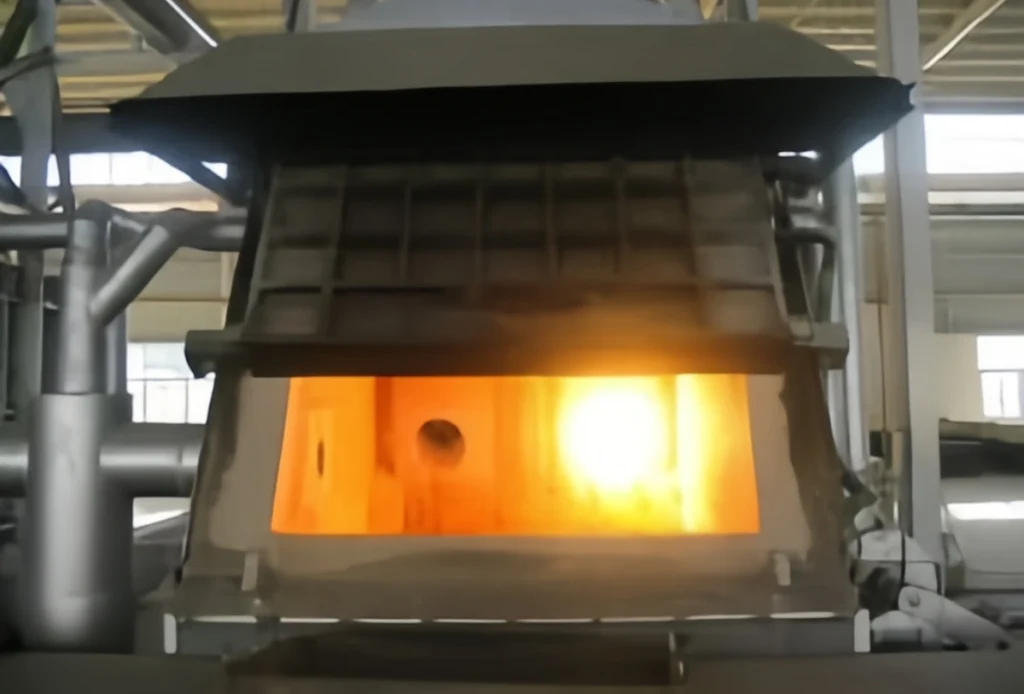
Molten Billet Casting in Aluminum Profile Extrusion

3. Smelting and Casting: Preparing the Billet

The “Billet” is the cylindrical log of aluminum used in the extrusion press.

  • Alloying: Pure aluminum is melted and mixed with silicon, magnesium, and manganese.
  • Grain Refinement: During casting, the cooling rate is strictly controlled to ensure a fine grain structure. A uniform grain structure is vital for stretch bending later; otherwise, the metal may develop “orange peel” textures or cracks during the bending process.

4. Deep Dive: Aluminum Profile Extrusion Technology

Aluminum profile extrusion is the process of forcing a heated aluminum billet through a shaped die opening.

4.1 The Mechanics of the Press

Hydraulic presses used in this industry range from 500 tons to over 6,000 tons.
  • Small Tonnage (500t-1000t): Used for intricate window and door trims.
  • Medium Tonnage (2500t-3600t): The industry standard for curtain wall profiles.
  • Large Tonnage (6000t+): Required for massive structural sections used in aerospace or large-scale infrastructure.

4.2 The Extrusion Cycle

  1. Billet Heating: Billets are induction-heated to 400°C – 500°C, making the aluminum “plastic” but not liquid.
  2. The Push: A ram pushes the billet into the container and through the die.
  3. Quenching: As the profile emerges, it must be cooled rapidly (via air or water) to “freeze” the alloy’s microstructure. This is the first step in achieving the desired “T” temper (e.g., T5 or T6).
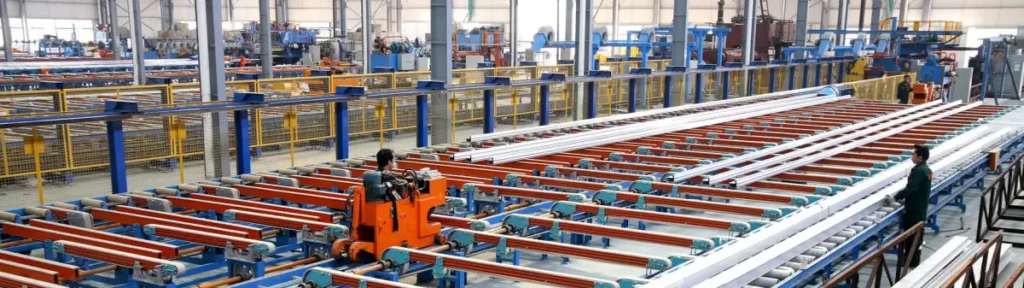
  4. Aging: Profiles are placed in an aging oven for 4-8 hours. This artificial aging increases the hardness and tensile strength, preparing the metal for structural loads.
Industrial Press Machine for Aluminum Profile Extrusion

5. Strategic Expansion: Aluminum Profile Stretch Bending

While extrusion creates straight lengths, modern architecture often demands curves. This is achieved through Stretch Bending Technology.

5.1 Why Stretch Bending?

Unlike traditional rolling, stretch bending involves pulling the aluminum profile to its yield point and then wrapping it around a mold. This method is superior because:

  • Reduces Springback: By stretching the metal fibers, the “memory” of the straight shape is minimized.
  • Maintains Cross-Sectional Integrity: It prevents the hollow chambers of the profile from collapsing or wrinkling.
  • High Precision: It allows for variable radii and complex 3D curves that are impossible with other methods.

5.2 The Relationship Between Extrusion and Bending

The quality of the aluminum profile extrusion directly impacts the bending results. If the wall thickness of the extrusion is inconsistent, the profile will twist during the stretch. Therefore, tight tolerances during the extrusion phase are non-negotiable for high-end curved projects.
Stretch Bending of Aluminum Profile Extrusion Parts

6. Surface Pre-treatment: The Foundation of Finish

Before any color is applied, the “extrusion lines” and surface oils must be removed.
The Typical Workflow:

  1. Degreasing: Removing industrial oils and fingerprints.
  2. Acid Pickling: Stripping the natural oxide layer to reveal the raw metal.
  3. Phosphating/Passivation: Creating a chemical “anchor” for the paint. Modern plants use non-chrome passivation to meet environmental standards.

7. Advanced Surface Finishing Techniques

The finishing process enhances both the durability and the aesthetic of the aluminum profile extrusion.

7.1 Powder Coating & PVDF (Fluorocarbon)

Both use electrostatic high-voltage fields to attract paint particles to the profile.

  • Powder Coating: Ideal for various colors and textures. The powder is baked into a hard “skin.”
  • PVDF (Fluorocarbon): The pinnacle of coatings. It offers extreme resistance to UV rays and chemical erosion. For profiles shaped by stretch bending for outdoor use, PVDF is the recommended standard.

7.2 Anodizing

Anodizing is an electrochemical process that thickens the natural oxide layer. It doesn’t sit on the metal; it is part of the metal. This makes it impossible to peel, providing a metallic finish that is incredibly durable.

7.3 Electrophoretic Coating

This involves submerging the anodized profile in a resin solution. Using an electric current, the resin is deposited into every microscopic pore of the oxide layer. The result is a glass-smooth finish that is exceptionally resistant to scratches and environmental wear.
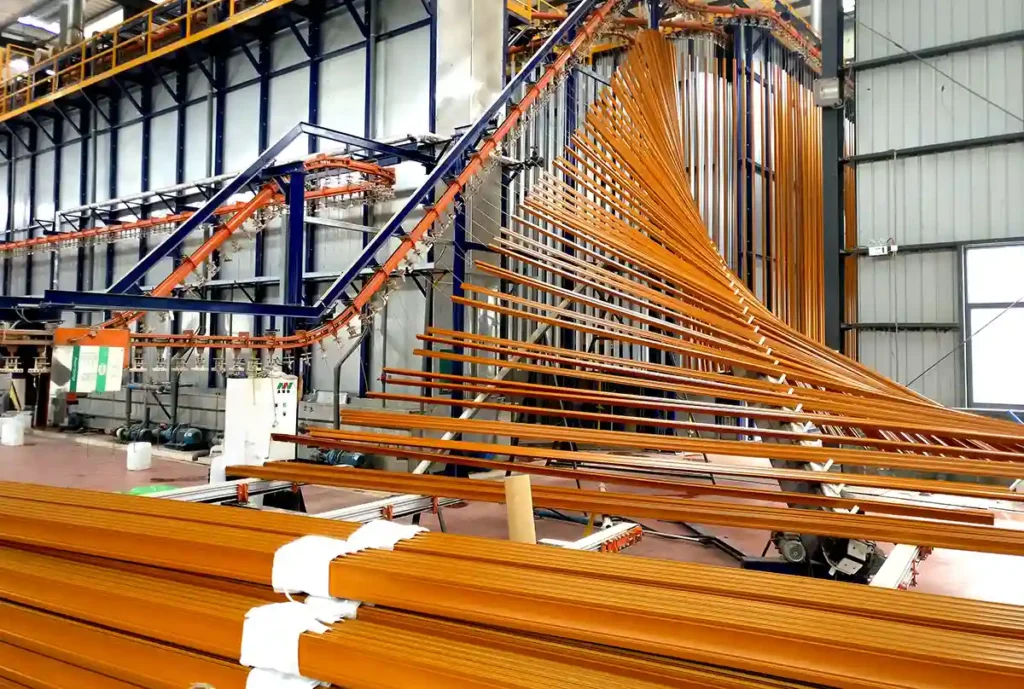
Powder Coating Line for Aluminum Profile Extrusion

8. Thermal Break Technology: The Future of Energy Efficiency

To meet modern green building codes, aluminum profile extrusion must address aluminum’s high thermal conductivity. This is done through “Thermal Breaks.”

8.1 Strip-Type Thermal Break

This involves inserting a Polyamide (PA66) strip between two aluminum profiles.

  • Knurling: Creating teeth in the aluminum slot.
  • Rolling: Mechanically “crimping” the aluminum around the strip to create a single structural unit.

8.2 Pour-and-Debridge (Resin Injection)

A two-part polyurethane is poured into a specialized pocket in the extrusion. Once it hardens, the bottom “bridge” of aluminum is cut away, leaving the resin to act as the thermal barrier. This method is often preferred for its superior structural strength in high-load scenarios.


9. Conclusion

The journey from a raw aluminum ingot to a high-precision, curved, thermally efficient architectural component is a masterclass in engineering. By mastering aluminum profile extrusion and the nuances of stretch bending technology, manufacturers can push the boundaries of what is possible in modern design.

As we look toward 2025 and beyond, the integration of smart manufacturing and sustainable alloys will continue to refine these processes, ensuring that aluminum remains the backbone of our built environment.